Blog icon

Top 10 PVC Hose Types for Global Buyers

Choosing a pvc hose is not simply a matter of matching a diameter to a machine. Buyers must consider the material being carried, operating pressure, temperature, flexibility, and exposure to sunlight or abrasion. A clear braided hose may suit a low-pressure transfer line, while a reinforced suction hose is built for different demands. Small details matter. A fitting that looks compatible may still leak if its size or connection style is wrong.

This guide introduces ten common PVC hose types used across industrial, agricultural, construction, food-handling, and general-purpose applications. Each type has practical strengths and limits. For example, a lightweight layflat hose stores easily on a shelf, but it may not be the best choice for a line that must resist crushing. A steel-wire-reinforced model can support suction, yet its added weight may make frequent handling less convenient. Buyers should confirm product specifications with the manufacturer rather than assume that similar-looking hoses perform alike.

The right choice depends on the actual job, not just the product name. Check the working pressure, temperature range, reinforcement, wall thickness, and compatibility with the conveyed material. Ask how the hose will be routed, stored, and cleaned. These checks can prevent avoidable downtime, though they cannot replace testing under real operating conditions. Even a carefully selected hose can disappoint when conditions change. That caveat is worth keeping in mind as you compare options for global sourcing.
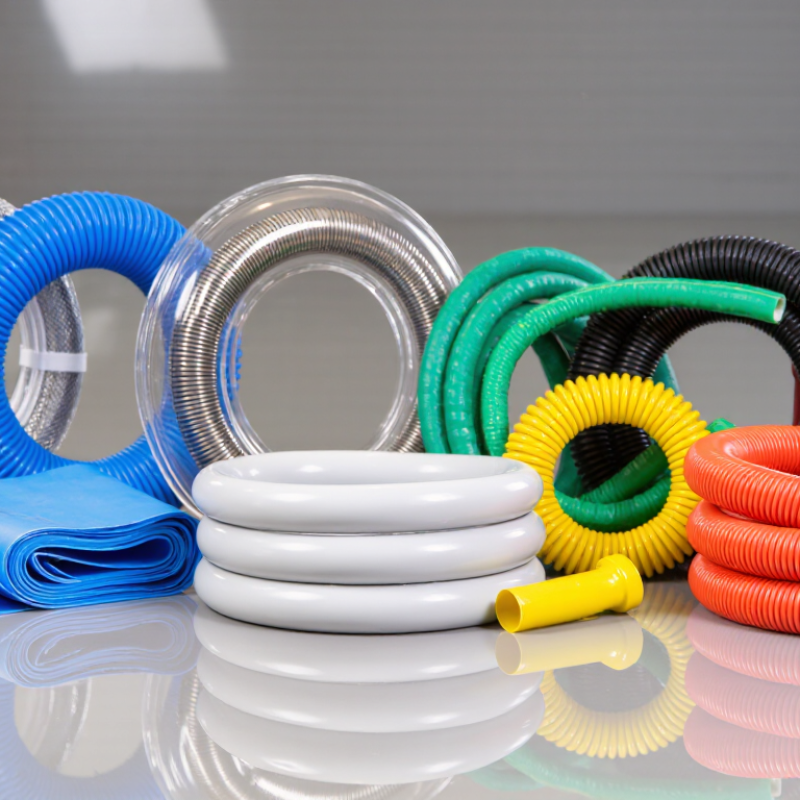
Top 10 PVC Hose Types for Global Buyers

PVC Hose Fundamentals: Materials, Structure, and Performance

PVC hose performance begins with its compound. PVC resin forms the tube, while plasticizers help it bend. Stabilizers and other additives can influence flexibility, color, and resistance to heat or sunlight. The exact blend matters. A soft garden hose and a rigid suction hose may both use PVC, yet behave very differently in service.

Structure adds another layer. A basic hose may have a single wall, while a reinforced type may include textile braid or a spiral helix. Reinforcement helps resist pressure, vacuum, or kinking, depending on its design. Clear walls make liquid flow easier to inspect, but visibility does not confirm chemical compatibility. Temperature also matters: a hose can stiffen in cold conditions or soften when exposed to heat. For buyers comparing common PVC hose types, match the construction to the task, not just the appearance. This is easy to overlook.

Tips: Check working pressure at the intended temperature, not just the maximum figure. Confirm inner diameter, bend radius, and fluid compatibility on the supplier’s specification sheet. If details are missing, ask before ordering. Small omissions can become costly on site.

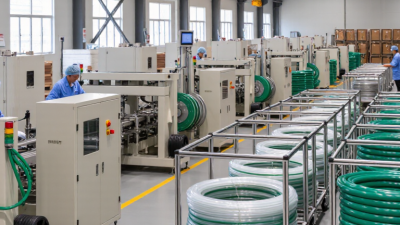
Key Factors Global Buyers Use to Select PVC Hoses

Global buyers should match a PVC hose to its working conditions, not just its price or diameter. PlasticsEurope’s Plastics – the Fast Facts 2023 reports 400.3 million tonnes of global plastics production in 2022, with PVC representing about 12.5%. That scale makes consistent resin specifications and supplier documentation worth checking. Still, polymer volume alone says little about a hose’s real performance.

Start with the fluid, operating pressure, and temperature range. Check pressure ratings at the actual working temperature; heat can reduce a hose’s capacity. Then compare inner diameter, wall thickness, reinforcement, and minimum bend radius. A hose that kinks behind a pump can restrict flow, even when its nominal diameter looks right. ISO 1307 sets dimensional requirements for rubber and plastics hoses, but buyers should also request test data for the specific construction. Small details matter.

Consider abrasion, UV exposure, and chemical contact at the installation site. For example, a hose dragged across a rough concrete floor needs a different outer layer from one kept indoors. Ask for batch traceability and documented pressure or compatibility tests. PlasticsEurope’s production figures provide useful market context, not a product-quality guarantee. I would still question any selection based only on a catalogue rating; real layouts and temperature swings can expose gaps that a neat specification sheet misses.

Ten PVC Hose Types and Their Distinctive Features

Top 10 PVC Hose Types for Global Buyers

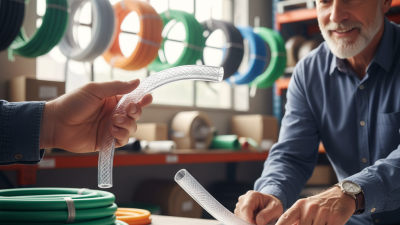
PVC hoses differ in reinforcement, flexibility, and the jobs they handle well. A clear PVC hose makes liquid flow and blockages easy to inspect. It suits light-duty transfer, but sunlight can cloud the wall over time. Braided PVC hose adds textile reinforcement for steadier pressure handling. It is common for water and general-purpose transfer. Layflat hose packs into a compact coil and opens under flow, making it practical for temporary discharge lines. It can kink if dragged carelessly.

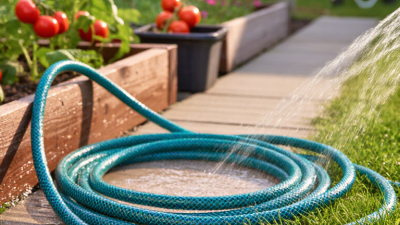
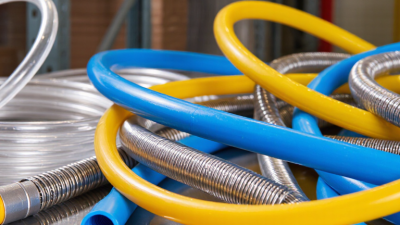
PVC suction hose uses a rigid spiral to resist collapse while drawing water or other compatible liquids. Steel-wire reinforced hose offers stronger vacuum support and can often be grounded where the application requires it. Spiral-reinforced PVC hose is flexible, with a helix that helps maintain its shape. Garden hose prioritizes easy handling for watering. Air hose is designed for compressed-air service, but its pressure rating deserves close attention. Small details matter.

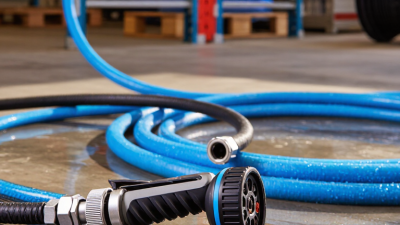
Spray hose typically has reinforcement for repeated liquid delivery through spray equipment. PVC ducting hose is lightweight and often corrugated, helping route air or dust around bends. Each type has limits. Buyers should check working pressure, temperature range, wall thickness, and fluid compatibility against actual operating conditions. A hose that looks right on a sample may behave differently in cold weather or under continuous pressure. Specifications are easy to overlook, and that is worth revisiting before purchase.

Top 10 PVC Hose Types for Global Buyers — Ten PVC Hose Types and Their Distinctive Features

PVC Hose Type Typical Construction Distinctive Features Common Applications Key Buying Consideration
Clear PVC Braided Hose Flexible PVC wall reinforced with a textile braid, often polyester. Transparent wall allows visual inspection of flow; braid improves resistance to internal pressure compared with unreinforced tubing. Water transfer, general-purpose fluid lines, and some low-pressure pneumatic applications. Check the specified working pressure, temperature range, and fluid compatibility for the exact hose construction.
PVC Layflat Hose Flexible PVC tube with textile reinforcement, made to flatten when empty. Can be rolled or stored compactly; opens under flow and is generally intended for discharge rather than suction. Irrigation, drainage, construction-site water transfer, and pump discharge. Confirm pressure rating, coupling method, abrasion resistance, and whether the application involves suction.
PVC Suction Hose Flexible PVC wall supported by a rigid PVC helix or other reinforcement. Designed to resist collapse under vacuum; the helix helps maintain the bore while the hose bends. Water pumping, tank emptying, and transfer of compatible liquids or slurries. Check vacuum rating, bend radius, helix material, and suitability for the specific fluid and solids content.
Steel Wire-Reinforced PVC Hose PVC wall with an embedded steel-wire helix, sometimes combined with textile reinforcement. Wire support helps resist collapse and can provide a path for electrical grounding when the hose is designed for it. Industrial liquid transfer, suction and discharge duties, and some material-handling systems. Verify vacuum and pressure limits, grounding requirements, and whether the wire is exposed or needs corrosion protection.
PVC Garden Hose Flexible PVC tube, commonly with textile reinforcement in pressure-rated versions. Lightweight and easy to handle; available in different constructions for household or light-duty outdoor watering. Garden watering, washing, and general outdoor water delivery. For drinking-water use, confirm that the hose is specifically certified for potable water in the destination market.
PVC Air Hose PVC tubing or a PVC hose reinforced with textile braid, depending on pressure requirements. Flexible option for compressed-air lines; reinforced constructions are used where higher working pressures are required. Air tools, compressors, and workshop or industrial pneumatic lines. Use the stated working-pressure rating and temperature limits; do not select by appearance or burst pressure alone.
Food-Contact PVC Hose PVC formulation and construction intended for specified food-contact conditions; may be reinforced. Can be made for transfer of selected food or beverage products, but suitability depends on the formulation and applicable regulations. Food and beverage processing or transfer where the hose's documentation permits the intended use. Check food-contact declarations, permitted foods, temperature, cleaning method, and regulatory requirements in the destination market.
Chemical-Transfer PVC Hose PVC tubing or reinforced hose selected for a defined chemical service. Offers a practical option for certain chemicals, but PVC is not compatible with every chemical or operating condition. Transfer of selected acids, alkalis, or process liquids when confirmed by compatibility data. Verify chemical concentration, temperature, exposure time, and compatibility with all hose layers and fittings.
PVC Ducting Hose Flexible PVC duct wall, often supported by a helix or external reinforcement. Designed to convey air or light materials; construction and helix spacing affect flexibility and resistance to collapse. Ventilation, dust collection, fume extraction, and light-duty air movement where suitable. Confirm temperature range, abrasion resistance, static-control needs, and suitability for the material being conveyed.
PVC Tubing (Unreinforced) Single-wall flexible PVC without textile or helical reinforcement. Lightweight, often transparent, and easy to cut; generally suited to lower-pressure service than reinforced hose. Low-pressure water or fluid lines, laboratory setups, and equipment connections where compatible. Check internal diameter, wall thickness, bend radius, pressure limits, and the intended fluid's compatibility.

Selection note: Pressure, temperature, vacuum, and chemical-resistance limits vary by product construction and size. Review the manufacturer's technical data and applicable local requirements before purchase.

Typical Applications Across Industries and Operating Conditions

PVC hose selection depends on the fluid, pressure, temperature, and movement at the job site. Braided hose suits general water and air lines, while clear PVC tubing helps operators inspect flow in laboratories and light-duty process systems. Suction hose, often reinforced with a rigid spiral, handles water transfer where vacuum could flatten a plain tube. Lay-flat hose is easier to store for temporary irrigation or drainage. Steel-wire-reinforced types provide added resistance to collapse in demanding suction service. Food-contact, chemical-transfer, spray, and ducting hoses serve more specialized needs. No single type fits every plant.

Agriculture is a major use case. FAO AQUASTAT reports that agriculture accounts for about 70% of global freshwater withdrawals, supporting the need for reliable irrigation and water-transfer equipment. For field work, consider lay-flat hose for long runs and abrasion-resistant suction hose near pumps. In workshops, compressed-air hose must match the system’s rated pressure and temperature; PVC may stiffen in cold conditions. That detail is easy to overlook. For chemical service, verify compatibility with the specific chemical and concentration, not just the hose’s general category.

Tips: Check the working-pressure rating, bend radius, reinforcement, and temperature range before ordering. Inspect fittings and hose walls after exposure to sunlight, kinks, or repeated flexing. A catalogue cannot reproduce every site condition, so test a sample where failure would disrupt operations.

Top 10 PVC Hose Types: Typical Applications Across Industries

Bars show the number of representative application examples listed for each hose type. This is not a market-share or performance ranking.

Examples: clear PVC—low-pressure water transfer, flow monitoring, drainage; braided PVC—rated compressed-air lines, water delivery, light industrial transfer; spiral-reinforced suction—water suction, irrigation, dewatering, tank transfer; layflat PVC—irrigation, site dewatering, drainage; food-contact PVC—food and beverage transfer, food processing; chemical-resistant PVC—chemical transfer, process dosing; PVC air hose—pneumatic tools, workshop air lines; PVC duct hose—ventilation, dust or fume extraction; garden PVC—watering, horticulture; oil-resistant PVC—lubricant and selected oil service. Select hose to suit the actual pressure, temperature, material compatibility, and required certifications; specifications vary by product.

Specifications and Supplier Checks for International Purchasing

PVC hose selection should begin with the working conditions, not the catalog photo. Match the hose to the medium, operating pressure, temperature range, and required bend radius. A clear braided hose may suit visible water transfer, while a reinforced suction hose needs support against collapse. Check inner diameter and wall thickness in millimetres, and confirm whether stated pressure applies at the expected temperature. Small details matter. A hose that kinks beside a pump can restrict flow even when its pressure rating looks adequate.

Ask suppliers for a current specification sheet, test results, and clear definitions of working and burst pressure. Verify construction details, including reinforcement material, layer count, and fitting compatibility. Request a sample when dimensions or flexibility are critical. Measure it yourself. A tidy document is useful, but it does not prove that every production batch matches the sample. That gap deserves attention.

For international purchasing, confirm packing length, coil dimensions, gross weight, and labeling before comparing freight quotes. Ask how the supplier identifies batches and handles quality complaints. Check that certificates relate to the exact hose model, not merely a similar product. Keep drawings, approved samples, and agreed tolerances in one record. Even with careful checks, a first shipment can reveal a mismatch; a few millimetres at a connection may be inconvenient, not trivial.