Blog 
How to Choose the Right Marine Hose for Your Boat?
Choosing a marine hose is not a cosmetic decision. The right hose helps carry fuel, water, exhaust, or waste safely through a boat’s tight spaces. The wrong one may soften, crack, leak, or restrict flow. Small details matter.
Start with the hose’s job. A fuel line and an exhaust hose face very different conditions, even when their diameters look similar. Check the manufacturer’s stated use, pressure rating, temperature range, and material compatibility before comparing prices. Measure the inside diameter, then note the route’s bends, connections, and nearby heat sources. A hose forced around a sharp corner can kink or wear against an engine bracket. That risk is easy to overlook.
Look closely at the installation, too. Clamps should fit the hose and connection properly, with no loose ends rubbing against moving parts. Leave enough room for inspection and future replacement. In a cramped bilge, a flashlight can reveal chafe marks or damp fittings that are hard to see from above. Do not assume that a familiar-looking hose is suitable for every system. Labels, product data, and advice from a qualified marine technician are more dependable than guesswork.
Cost is tempting. Still, the cheapest option may not match the job. I would also question any recommendation that ignores the boat’s specific layout; even good guidance has limits without measurements and application details. This guide explains how to compare hose types, verify key specifications, and spot installation concerns before they become costly problems.
Identify the Marine System and Hose Application
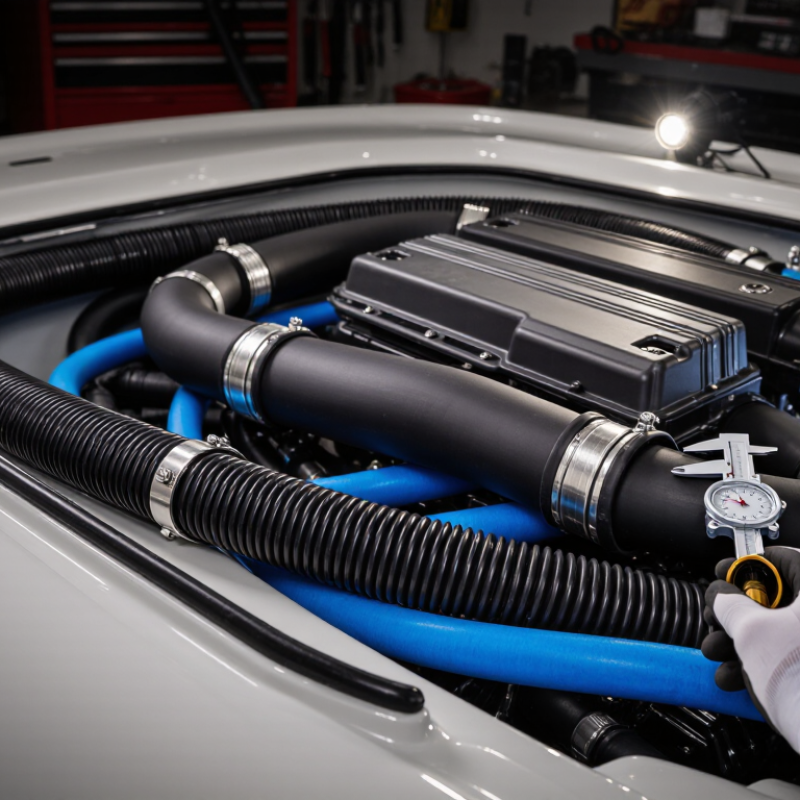
Before choosing a marine hose, identify the system it will serve. A hose carrying fuel has different requirements from one carrying fresh water or bilge water. Start at the connection and trace the line to its destination. A hose near the engine may look like a coolant line, but appearance alone is not enough.
Match the hose to its actual job. Fuel lines need materials rated for the fuel and operating conditions. Potable-water hoses should be suitable for drinking-water contact, while sanitation hoses must resist waste, odor, and cleaning chemicals. Bilge hoses may need to handle water, debris, and suction. Exhaust hoses face heat, vibration, and sometimes hot water. Details matter.
Then check the working conditions: pressure, temperature, suction, and movement. A hose that handles pressure may still collapse under suction. Measure the inside diameter and route length, and note tight bends, clamps, and engine movement. Read the hose markings and installation guidance rather than relying on color. It is easy to overlook a small label. I would also question any old hose whose original purpose is unclear; guessing can lead to a poor fit or early failure. When the application remains uncertain, confirm it with a qualified marine technician.
Determine the Required Size, Pressure, and Temperature Ratings
How to Choose the Right Marine Hose for Your Boat?
Determine the Required Size, Pressure, and Temperature Ratings
Start with the hose’s job: fuel, cooling water, sanitation, or exhaust. Each application needs a hose designed for that specific service. Measure the required inside diameter and check that it matches the fittings; a hose that is too narrow can restrict flow, while a loose fit may leak. Use the boat’s manual or equipment specifications as your reference, not the old hose alone. Previous installations are not always correct.
Tips: Check the hose markings for its intended use, working pressure, and temperature range. Compare these ratings with the system’s normal conditions and likely pressure surges. For temperature, consider both the fluid and nearby engine heat. Leave room for movement, but avoid sharp bends or contact with hot surfaces.
Choose a pressure rating that meets or exceeds the system’s documented requirement. Do not confuse working pressure with burst pressure. If the rating is unclear, confirm it with the equipment maker or a qualified marine technician before installation. Small details matter: a clamp can look secure while sitting unevenly on a fitting. Recheck connections after a short run, and inspect for seepage, soft spots, or cracking. I would not guess on a hose rating; that shortcut can be costly.
How to Choose the Right Marine Hose for Your Boat
Start by matching the hose’s inside diameter to the connection. The chart shows common nominal hose sizes converted to millimeters (1 inch = 25.4 mm).
Pressure and temperature: Check the hose markings and product specifications against the maximum operating pressure and temperature of your system. Allow for any applicable safety margin, and confirm the hose is suitable for the specific service, such as fuel, coolant, or exhaust. Do not select a hose by diameter alone.
Compare Hose Materials and Construction Types
A marine hose must match the fluid, temperature, pressure, and movement it will face. Fuel hose commonly uses fuel-resistant rubber compounds, while EPDM is often used for coolant and wet-exhaust applications. These materials are not interchangeable. A hose that looks sturdy may still soften, crack, or leak when exposed to the wrong fluid. Check the hose markings and equipment specifications rather than choosing by appearance alone. Small details matter.
Construction changes how a hose performs. Textile reinforcement suits many pressure lines, while a wire helix helps a suction hose resist collapse as a pump draws water. Smooth-bore interiors can support steady flow; corrugated walls bend more easily around tight spaces but may add flow resistance. Exhaust hose also needs reinforcement and a temperature rating suited to its location. Measure the route, including bends and engine movement. A tight fit can strain connections. It is tempting to buy extra length “just in case,” but a loose loop can rub against a hot surface or vibrate against a bulkhead. I have seen hose selection treated as a simple diameter question; it rarely is. Compare material compatibility, construction, and installation conditions before fitting a replacement.
How to Choose the Right Marine Hose for Your Boat? — Compare Hose Materials and Construction Types
| Hose Type | Common Materials | Typical Construction | Best Suited For | Key Selection Checks | Common Limitations |
|---|---|---|---|---|---|
| Marine fuel hose | Fuel-resistant elastomer lining, often nitrile-based, with a compatible outer cover | Textile reinforcement; some designs also include a helical wire for flexibility or collapse resistance | Fuel supply, fill, or vent systems when the hose is specifically approved for the intended fuel and installation | Check the required marine fuel-hose standard, fuel compatibility, temperature and pressure limits, and whether the location requires fire-resistant hose. | Not every fuel hose is suitable for every fuel, fill line, vent line, or engine-space location. Do not substitute general-purpose rubber hose. |
| Marine exhaust hose | Heat-resistant rubber, commonly with an elastomer lining and a weather-resistant outer cover | Heavy textile reinforcement; wire helix may be used where routing or suction resistance requires it | Wet-exhaust and cooling-water discharge runs designed for the hose’s rated service conditions | Check continuous and intermittent temperature ratings, pressure or vacuum rating, inside diameter, bend radius, and compatibility with the exhaust layout. | Temperature limits vary by product and operating conditions. A hose rated for wet exhaust should not be assumed suitable for dry exhaust. |
| Sanitation hose | Odor-resistant elastomers, PVC compounds, or multilayer polymer constructions, depending on the product | Smooth-bore or reinforced-wall designs; some flexible versions use a corrugated exterior | Marine toilet discharge and holding-tank connections when the product is intended for sewage service | Look for sanitation-service suitability, odor-barrier performance, bend radius, fitting compatibility, and resistance to the cleaning products used. | Ordinary water hose may allow odors to permeate or may not tolerate sewage-system conditions. Corrugations can be harder to clean and may restrict flow. |
| Potable-water hose | Potable-water-compatible PVC or elastomer materials; some hoses use multiple layers | Usually a flexible tube with textile reinforcement; a smooth bore helps maintain flow and simplifies cleaning | Fresh-water tanks, pumps, faucets, and other drinking-water systems when specifically rated for potable water | Confirm potable-water certification or approval applicable to the installation, temperature rating, pressure rating, and resistance to taste or odor transfer. | General-purpose hose may not be approved for drinking water and can affect water taste or quality. Keep it separate from fuel and sanitation lines. |
| Bilge and general drainage hose | Often PVC or another flexible polymer; heavier-duty products may use rubber compounds | Lightweight corrugated or smooth-wall construction; wire reinforcement may be included for suction applications | Bilge-pump discharge and other drainage routes, provided the hose is rated for the pump and installation | Check the pump’s discharge size, the hose’s pressure or vacuum rating, temperature range, routing, and whether the run must resist kinking or collapse. | Light-duty corrugated hose can kink or restrict flow when sharply bent. Bilge hose is not automatically suitable for fuel, potable water, or exhaust service. |
| Raw-water intake hose | Marine-grade rubber or polymer compounds selected for water exposure and the intended temperature range | Typically reinforced, often with a wire helix, to resist collapse under suction | Seawater or raw-water intake lines serving systems such as engine cooling, subject to the equipment design | Verify vacuum resistance, inside diameter, bend radius, temperature range, and compatibility with seawater and any treatment chemicals. | A pressure-only rating does not establish suction suitability. Unreinforced hose may collapse under vacuum or at a tight bend. |
Selection reminder: Choose hose by service, not appearance alone. Confirm the applicable marine standard and the hose’s marked ratings with the manufacturer, follow the boat and equipment manuals, and use compatible fittings and clamps. Ratings and approvals vary by product and installation.
Check Marine Standards, Fittings, and Compatibility
Choosing the right marine hose begins with its job, not its appearance. Fuel, exhaust, bilge, sanitation, and drinking-water systems need different hose constructions. Check the vessel manual and applicable marine standards for that system. Look for clear markings showing the hose’s intended service, pressure rating, and temperature range. A hose that feels sturdy may still be unsuitable for hot engine water or fuel vapor. Small print matters.
Fittings must match the hose’s inside diameter and the system connection. Measure the fitting’s outside diameter rather than guessing from an old hose. Check that the hose material tolerates the fluid, heat, and cleaning products it will encounter. Also allow for bends: a tight turn near an engine can kink the hose or strain a connection. The fit can look right, yet still be wrong. Standards and manuals help, but an awkward installation may need a qualified marine technician’s review.
Tips: Dry-fit the hose before cutting, and check its route with the engine cover closed. Use clamps suitable for marine service, positioned behind the fitting’s bead. Don’t stretch a hose to make it reach. If a marking is missing or compatibility is unclear, pause and verify it; replacing a short section later is no fun.
Inspect the Hose and Plan for Proper Installation and Maintenance
A marine hose can look sound from above while hiding damage beneath a clamp or behind an engine. Check its full length, including hard-to-reach bends, for cracking, bulges, soft spots, chafing, corrosion, and fuel odor. Run a clean cloth along accessible surfaces; dampness or residue deserves attention. Look closely. The U.S. Coast Guard’s 2023 Recreational Boating Statistics recorded 3,844 reportable boating accidents and 564 deaths. The report does not identify hose failures as a separate cause, but it underlines why routine equipment checks matter.
Plan installation around the hose’s actual job: fuel, exhaust, sanitation, or water service. For fuel lines, verify that the hose marking and documentation match the required marine application; SAE J1527 and ISO 7840 specify marine fuel-hose requirements. Avoid sharp bends, twisting, hot surfaces, and contact with moving parts. Support long runs, use compatible fittings and clamps, and leave access for future inspection. Follow the vessel and hose manufacturers’ guidance for replacement intervals; there is no universal schedule for every material and operating condition. Record the installation date and each inspection. A note on a damp engine-room clipboard may seem fussy, but memory is not a maintenance system. After installation, check for leaks under the conditions specified by the equipment maker, then recheck clamps and routing during regular service.
Related Posts
-
2026 Best Marine Hose Solutions for Global Buyers?
-
The Ultimate Guide to Choosing the Right Marine Hose for Your Boat
-
Understanding the Latest Innovations in Marine Hose Technology: Boosting Efficiency and Safety in Marine Operations
-
Essential Marine Hose Tips for Optimal Performance and Safety?
-
How to Choose the Right Marine Hose for Your Needs?
-
What Is a Used Fire Hose Used For?