Blog 
2026 Top Solar PV Battery Types for Global Buyers
Choosing the right Solar Pv Battery is becoming a practical challenge for global buyers in 2026. Solar systems now serve homes, farms, factories, islands, and remote telecommunications sites. Each application demands a different balance between safety, cost, cycle life, and power output.
Dr. Imre Gyuk, a recognized energy-storage specialist, has described storage as “a key enabler of the clean energy transition.” His point matters because solar generation changes with clouds, seasons, and local electricity demand. A battery can store midday power and release it after sunset. However, it cannot correct poor system design.
Lithium iron phosphate, or LFP, remains a leading choice for residential and commercial projects. It offers strong cycle life and avoids nickel and cobalt. NMC batteries can provide high energy density, but buyers must examine thermal management and operating conditions carefully. Lead-acid batteries still suit limited budgets and simple installations, although their shorter service life can raise replacement costs. Sodium-ion and flow batteries deserve attention in selected markets, but availability and supplier experience remain uneven.
Look beyond the chemistry.
A reliable comparison should include usable capacity, round-trip efficiency, warranty terms, degradation assumptions, inverter compatibility, and after-sales support. A battery rated at 10 kilowatt-hours may deliver less usable energy after reserve settings and conversion losses. Temperature also matters. A dusty, poorly ventilated enclosure can reduce performance faster than expected.
This guide compares the top Solar Pv Battery types for global buyers. It also recognizes an uncomfortable reality: the cheapest quotation is rarely the lowest lifetime cost. Market data changes quickly, and no single battery chemistry wins everywhere.
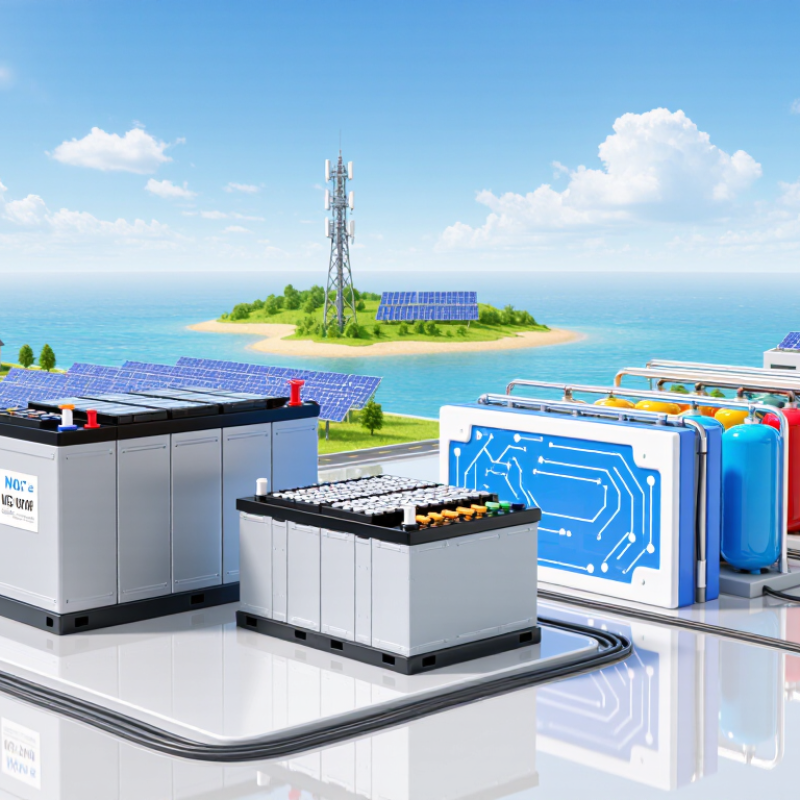
Solar PV Battery Basics and Their Role in Modern Energy Systems
A solar PV battery stores surplus electricity for later use. During sunny hours, panels may produce more power than a home or facility needs. The battery charges through an inverter, then discharges after sunset, during outages, or during expensive tariff periods. Its practical value depends on usable capacity, depth of discharge, round-trip efficiency, and response time. A 10 kWh battery does not always deliver 10 kWh to the load. Conversion losses and reserve settings reduce the available energy.
Lithium iron phosphate batteries are widely considered for daily cycling because they offer stable chemistry and long service life. Lithium nickel manganese cobalt batteries can provide high energy density, but thermal management demands closer attention. Lead-acid systems remain relevant where upfront cost matters, although their usable capacity and cycle life are often lower. Flow batteries suit some larger installations needing long discharge periods and flexible scaling. No chemistry wins everywhere. Context matters.
From project evaluations, I would check the battery management system, operating temperature range, warranty conditions, and replacement pathway. A shaded, ventilated room can protect performance in hot climates. Cold weather can slow charging and requires suitable control settings. Buyers should compare delivered energy, not only advertised capacity. Grid rules, fire protection, installer competence, and recycling arrangements also influence the real project outcome. Even careful forecasts can miss seasonal demand. That uncertainty deserves a margin.
Key Battery Chemistries Used in Solar Storage
For global solar buyers in 2026, battery chemistry matters more than headline capacity. Lithium iron phosphate (LFP) now suits many daily-cycling systems because it offers strong thermal stability and long service life. The International Energy Agency reported that lithium-ion battery prices fell about 90% between 2010 and 2023. LFP also generally costs less than nickel-rich chemistries. Nickel-manganese-cobalt (NMC) provides higher energy density, but it demands stricter thermal management. Space-constrained sites may still value that advantage.
Other chemistries deserve careful attention. Lead-acid remains familiar and relatively affordable, yet its heavier weight and limited deep-cycle performance can raise replacement costs. Sodium-ion cells offer promising material flexibility and better cold-weather potential, although commercial availability and field data remain uneven. Flow batteries can support long-duration storage, but their tanks require more land. The U.S. Department of Energy identifies duration, safety, degradation, and lifecycle cost as central storage design factors. No chemistry wins every site. That is the uncomfortable part.
Tips: Match the battery to the duty cycle, not only the kilowatt-hour price. Check warranty assumptions, operating temperature, usable capacity, and round-trip efficiency. In a hot rooftop enclosure, ventilation and monitoring may matter more than a small chemistry discount. I would also request independent test data. Supplier claims can look precise, but real project conditions are rarely perfect. According to BloombergNEF’s battery market analysis, falling cell prices improve project economics, yet installation, controls, and replacement planning still shape total cost.
2026 Top Solar PV Battery Types for Global Buyers
Key battery chemistries used in solar storage, compared by typical cycle life to 80% remaining capacity.
How to Compare Solar Batteries for Different Global Markets
2026 Top Solar PV Battery Types for Global Buyers
Comparing solar batteries across global markets requires more than checking capacity and price. Lithium iron phosphate batteries suit many hot climates because they offer strong thermal stability and long cycle life. Nickel manganese cobalt batteries can provide high energy density, but temperature control and safety planning need closer attention. Lead-acid systems remain practical for small, budget-sensitive projects, although their shorter lifespan increases replacement work.
A neat comparison can still mislead. Local sunlight, electricity tariffs, import duties, and installer skills change the real value. In Australia, high household consumption may favor deep daily cycling. In remote African communities, simple maintenance and reliable spare parts can matter more than peak efficiency. Cold northern regions require verified low-temperature charging performance. Buyers should also check safety certifications, recycling routes, warranty terms, and grid-connection requirements. These details often expose hidden costs.
Tips: Compare usable capacity, not only rated capacity. Ask for cycle-life test conditions. Review performance at local temperatures. Confirm installation and transport requirements. Request independent test records when possible. A spreadsheet helps, but field data remains stronger.
Sodium-ion batteries may attract buyers seeking alternative chemistry and improved low-temperature behavior. However, market availability and installer experience vary widely in 2026. Do not assume a newer chemistry is automatically better. A project team should measure daily loads for several weeks before selecting storage. We have seen oversized systems waste capital, while undersized systems disappoint during cloudy periods. The best choice depends on climate, duty cycle, regulations, and service capability—not a universal ranking.
2026 Top Solar PV Battery Types for Global Buyers - How to Compare Solar Batteries for Different Global Markets
| Battery Type | Typical Solar PV Application | Typical Round-Trip Efficiency | Expected Cycle Life to Approximately 80% Capacity | Usable Depth of Discharge | Typical Energy Density | Temperature Considerations | Main Advantages | Main Limitations | Best-Fit Global Markets |
|---|---|---|---|---|---|---|---|---|---|
| Lithium Iron Phosphate (LFP) | Residential storage, commercial and industrial PV, microgrids, and utility-scale battery energy storage systems | 90%–96% | 4,000–8,000 cycles | 80%–95% | Approximately 90–160 Wh/kg at cell level | Charging below 0°C generally requires temperature control or manufacturer-approved limits; performance declines in cold weather | High safety margin, long service life, good thermal stability, cobalt-free chemistry, and strong cost-performance balance | Lower energy density than many nickel-based lithium batteries; heating may be needed in cold climates | Most regions, especially residential and C&I markets requiring daily cycling and long operating life |
| Nickel Manganese Cobalt (NMC) | Space-constrained residential systems, mobile or hybrid applications, and installations prioritizing compact size | 90%–95% | 2,000–5,000 cycles | 80%–90% | Approximately 150–250 Wh/kg at cell level | Moderate cold-weather performance; charging controls and thermal management are important | Higher energy density, compact footprint, and good power capability | Generally higher thermal-management requirements, shorter cycle life than LFP in many stationary-duty profiles, and greater sensitivity to operating conditions | Urban and space-limited markets where physical size and weight are more important than maximum cycle life |
| Lithium Titanate (LTO) | High-cycle microgrids, fast-charge systems, frequency regulation, and harsh-climate or high-power applications | 90%–98% | 10,000–20,000 cycles | 80%–100% | Approximately 50–90 Wh/kg at cell level | Very strong low-temperature charging and power performance compared with most lithium-ion chemistries | Exceptional cycle life, high charge and discharge rates, and strong thermal stability | Low energy density and high upfront cost per stored kilowatt-hour | Cold regions, high-throughput commercial systems, transport-linked energy storage, and applications with frequent cycling |
| Sodium-Ion | Emerging residential, commercial, and grid storage where low-temperature performance, material availability, or cost stability is important | 85%–92% | Approximately 3,000–6,000 cycles, depending on cell design and operating conditions | 80%–95% | Approximately 100–160 Wh/kg at cell level | Generally promising low-temperature behavior; verified charging limits must be checked for each product | Uses more widely available sodium-based materials, avoids lithium dependence, and can offer good safety and cold-weather characteristics | Less mature supply chain, lower energy density than many lithium-ion cells, and fewer long-term field records | Markets seeking supply-chain diversification, cold-climate storage, and cost-sensitive stationary applications |
| Valve-Regulated Lead-Acid (AGM/GEL) | Backup power, small off-grid PV systems, telecom sites, and projects with low cycling requirements | 70%–85% | 500–1,500 cycles | 50%–80%; shallower operation generally extends service life | Approximately 30–50 Wh/kg | Capacity and service life are reduced by high temperatures; cold temperatures reduce available capacity | Established recycling routes, simple system integration, broad service knowledge, and relatively low initial purchase cost | Heavy, bulky, lower efficiency, shorter cycle life, and more sensitive to deep discharge | Cost-sensitive backup systems, remote installations, and regions with established lead-acid maintenance and recycling infrastructure |
| Flow Battery | Long-duration commercial, renewable integration, and utility-scale storage with frequent deep cycling | 65%–85% | 10,000–20,000+ cycles; calendar life can exceed 20 years with appropriate maintenance | 80%–100% | Approximately 10–40 Wh/kg at system level | Electrolyte temperature management may be required; freezing and high-temperature limits depend on chemistry | Deep discharge capability, low degradation from cycling, and power-to-energy sizing flexibility | Large footprint, lower energy density, pumps and auxiliary equipment, and higher balance-of-system complexity | Utility and large C&I projects with available land and four-hour-or-longer storage requirements |
Safety, Lifespan, Efficiency, and Maintenance Considerations
In 2026, global solar buyers will compare battery chemistry, not only purchase price. Lithium iron phosphate batteries offer strong thermal stability, long cycle life, and dependable daily operation. Their lower energy density requires more installation space. Nickel manganese cobalt batteries provide higher energy density for compact systems. However, they demand stricter temperature control and protection against overcharging. Lead-acid batteries remain familiar and affordable, but their shorter lifespan requires careful discharge limits. Sodium-ion systems are emerging, though field data remains less extensive. No chemistry is perfect.
Safety depends on design, installation, and operating conditions. Install batteries in dry, ventilated areas with clear access for inspection. Keep them away from heat sources, water leaks, and flammable storage. Use certified enclosures, circuit protection, and a battery management system. Thermal monitoring matters in hot climates. Efficiency also changes with temperature, cable length, inverter quality, and charging speed. A battery rated at high efficiency may perform worse when poorly sized. Oversizing is not always wasteful; it can reduce deep cycling and improve service life.
Maintenance is usually simple, but neglect becomes expensive. Inspect terminals, cables, seals, and ventilation paths at scheduled intervals. Review system alerts and state-of-charge records each month. Clean carefully. Firmware updates can improve control, yet they may introduce unexpected settings. Capacity testing helps identify aging before outages occur. In remote sites, spare fuses and documented procedures are valuable. A low-maintenance battery still needs attention. I would not trust advertised lifespan without checking temperature, depth of discharge, and warranty conditions.
2026 Selection Criteria for Residential, Commercial, and Utility Projects
For global buyers, battery selection should begin with project conditions, not chemistry trends. The International Energy Agency reported 42 GW of new battery storage capacity in 2023, exceeding 130% annual growth. This expansion increases the need for disciplined evaluation. Residential projects often favor lithium iron phosphate batteries because of their thermal stability and long cycle potential. Check usable capacity, round-trip efficiency, operating temperature, warranty limits, and emergency backup performance. A compact home system may need only four to six hours of daily storage.
Commercial projects require a broader calculation. Demand-charge reduction, peak shaving, tariff schedules, and available floor space can change the preferred battery type. Nickel-rich lithium batteries may provide higher energy density, but lithium iron phosphate often offers stronger safety margins and longer cycling. The National Renewable Energy Laboratory’s Annual Technology Baseline emphasizes comparing capital cost, degradation, efficiency, and replacement timing. Cost alone misleads.
Utility projects usually need duration, predictable degradation, fire controls, and grid-service compatibility. Four-hour lithium systems remain common, while flow batteries can suit longer-duration applications where space is available. Sodium-ion systems may deserve evaluation for cold climates or supply diversification, but field experience remains less mature. Lazard’s Levelized Cost of Storage analysis shows that duration and utilization strongly affect storage economics. A neat spreadsheet can still fail in practice. Buyers should test seasonal performance, auxiliary loads, installation access, and end-of-life obligations before signing procurement terms.
