Blog 
What Types of Titanium Metal Sheet Are Available?
Titanium Metal Sheet is not a single, uniform product. Buyers can choose commercially pure grades, such as Grade 1 or Grade 2, or alloyed grades, including Grade 5 Ti-6Al-4V. These options differ in strength, formability, corrosion performance, and intended fabrication route. ASTM B265 provides the industry specification for titanium and titanium alloy strip, sheet, and plate, including requirements for chemistry, mechanical properties, dimensions, and surface condition. Details matter. A grade name alone does not confirm that a sheet suits a specific component; thickness, temper, finish, and inspection records also deserve attention.
Market data helps explain the material’s wider supply context. The U.S. Geological Survey’s Mineral Commodity Summaries 2025 reports on global titanium mineral and sponge production, offering a useful view of the upstream industry. It does not classify finished sheet products, so it should not be treated as a sheet-buying guide. That distinction is easy to overlook. In practice, the available sheet types are better compared by grade, manufacturing condition, and application. A thin sheet intended for forming may need different properties from a thicker sheet used in a highly loaded part. This guide outlines the main types, their typical characteristics, and the checks that help match material to use. Exact availability varies by supplier, and published specifications should be verified against current mill documentation.
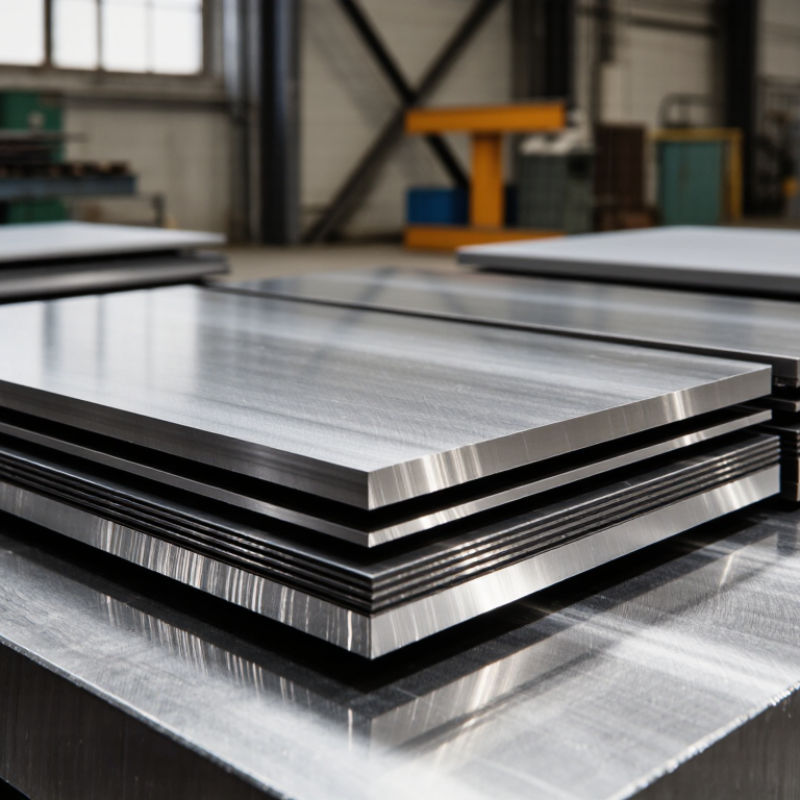
Titanium Sheet Types by Composition and Grade
Titanium sheet is commonly classified as commercially pure or alloyed, then specified by grade. Commercially pure grades contain mostly titanium, with controlled amounts of oxygen, iron, and other elements. Grade 1 is soft and highly formable, while Grade 2 offers a useful balance of strength and corrosion resistance. Composition matters. Even small changes can affect how sheet bends or performs in service.
Alloyed grades add elements to change mechanical properties. Grade 5, or Ti-6Al-4V, provides higher strength but is generally less formable than commercially pure grades. Grade 9, Ti-3Al-2.5V, offers moderate strength and can suit formed components. Grade 7 includes palladium to improve corrosion resistance in certain environments. There is no universally best grade; the trade-off is easy to underestimate.
Tips: Match the grade to the actual exposure, forming steps, and required strength. Check the applicable material specification, thickness, and supply condition before ordering. A grade name alone may not describe every requirement, so confirm details with the material supplier or engineer.
Commercially Pure Titanium Sheets and Their Grades
Commercially pure titanium sheets are not chemically pure titanium; they contain controlled trace elements. Grades 1 through 4 differ in composition and mechanical properties, especially strength and formability. Grade 1 is the softest and most formable, making it useful for parts with tight bends or complex shapes. It also offers strong corrosion resistance in many environments. Good for forming.
Grade 2 is a widely used middle ground, combining useful strength, weldability, and corrosion resistance. Grade 3 is stronger, but forming it may require more force and careful tooling. Grade 4 has the highest strength among these commercially pure grades, though it is less forgiving during forming. Not interchangeable.
For a sheet selection, consider the finished shape, service environment, thickness, and joining method. A deep-drawn component may favor Grade 1, while a more strength-focused design may call for Grade 2, 3, or 4. These are starting points, not guarantees. Check the applicable sheet specification and review the material certificate for chemistry and mechanical properties. A detail easy to overlook: actual performance can depend on fabrication and service conditions, not grade alone.
Titanium Alloy Sheets: Alpha, Alpha-Beta, and Beta
What Types of Titanium Metal Sheet Are Available?
Titanium Alloy Sheets: Alpha, Alpha-Beta, and Beta
Titanium sheet grades are commonly grouped by their crystal structure, which influences strength, forming behavior, and heat-treatment response. Alpha alloys, including commercially pure titanium, are generally weldable and resist corrosion well. They suit formed parts exposed to moisture or chemicals. ASTM B265 covers titanium and titanium-alloy sheet, strip, and plate, with grade-specific requirements. Check the grade, thickness, and condition—not just the alloy family.
Alpha-beta alloys combine both structures. Ti-6Al-4V is a widely used example, valued for its balance of strength and formability. ASTM B265 specifies a minimum tensile strength of 895 MPa for Grade 5 sheet. That is a useful reference, not a guarantee for every finished part; processing and material condition matter. Beta alloys can offer high strength and good formability after solution treatment and aging, but their properties depend strongly on composition and heat treatment. Details matter.
Supply context helps explain why sourcing deserves care. The USGS Mineral Commodity Summaries 2024 estimated global titanium sponge production at about 300,000 metric tons in 2023. Sponge is not sheet, but it is an upstream input, and conversion capacity also shapes availability. For a real selection, ask for the mill test certificate and verify the specification, thickness tolerance, and heat-treatment condition. I would not choose from a datasheet headline alone. Small differences matter.
Sheet Types by Thickness, Surface Finish, and Processing
Titanium sheet is commonly selected by thickness, surface finish, and processing route. Thin sheet bends readily and suits formed covers or lightweight panels, but it can wrinkle under uneven pressure. Thicker sheet feels more rigid and may need stronger cutting and forming equipment. Fit matters. Available thickness ranges vary by supplier and material specification, so confirm the actual dimensions before designing parts.
Surface finish affects both appearance and preparation. Mill-finished sheet often shows a practical, slightly textured look. Pickled surfaces have had scale removed, while polished finishes are smoother and more reflective. Processing also changes performance: hot-rolled stock is often used for heavier sections, while cold-rolled sheet can provide tighter thickness control and a cleaner surface. Annealing may improve formability, though the right condition depends on the alloy and intended operation. These categories overlap; a polished sheet may still require further forming.
Tips: Match the finish to the next step. For welding or bonding, check surface cleanliness and follow suitable preparation guidance. Inspect edges for burrs, and confirm flatness if the sheet must sit against a close-fitting frame. A supplier’s data sheet helps, but it may not answer every shop-floor question. Ask for the material grade, thickness tolerance, and processing condition. Don’t assume appearance tells the whole story.
| Sheet Type | Typical Thickness | Common Grades | Typical Surface Finish | Common Processing | Characteristics and Typical Uses |
|---|---|---|---|---|---|
| Thin-gauge sheet | Approximately 0.1–0.5 mm | Commercially pure Grades 1 and 2; Grade 5 alloy also available | Mill finish; bright or polished finish may be specified | Cold rolling, annealing, slitting, and precision cutting | Lightweight and formable, especially in commercially pure grades. Used for formed components, diaphragms, and lightweight fabrication where the specified grade and thickness meet design requirements. |
| Light sheet | Approximately 0.5–1.5 mm | Grades 1–4; Grade 5 for higher-strength applications | Mill, pickled, or polished | Cold rolling or hot rolling, annealing, leveling, and shearing | A versatile range for formed parts and corrosion-resistant enclosures. Grades 1 and 2 are commonly selected for formability; Grades 3 and 4 offer higher strength among commercially pure grades. |
| Medium-gauge sheet | Approximately 1.5–3.0 mm | Grades 2–4; Grade 5 and Grade 7 are also available for suitable applications | Mill, pickled, or blasted | Hot or cold rolling, annealing, leveling, and plasma, laser, or waterjet cutting | Used for fabricated panels, chemical-process components, and structural parts. Grade 7 contains a small palladium addition for improved corrosion resistance in certain reducing environments. |
| Heavy-gauge sheet | Approximately 3.0–4.76 mm (0.1875 in) | Grades 2–4; Grade 5 for higher strength | Mill, pickled, or blasted | Hot rolling, annealing, flattening, and mechanical or thermal cutting | Offers greater rigidity than thinner sheet. Product classification and supply form can vary with the applicable specification and producer; thicker material may be supplied or specified as plate. |
| Pickled sheet | Available across multiple gauges | Commonly Grades 1–4 and Grade 5 | Pickled, with a clean, matte appearance | Acid pickling removes oxide scale and heat-treatment scale; rinsing and drying follow | Selected when a cleaner surface is needed after hot processing or annealing. Pickling changes the surface condition, not the titanium grade or base-metal thickness specification. |
| Polished sheet | Available across selected gauges | Commonly Grades 1 and 2; other grades may be specified | Mechanically polished or bright finished; appearance depends on the specified finish | Surface grinding or polishing, followed by inspection and protective handling | Used where a smoother or more reflective surface is required. Specify the finish and acceptance criteria, since “polished” does not describe one universal roughness level. |
| Patterned or textured sheet | Available in selected thicknesses | Grade 1, Grade 2, and other grades subject to availability | Embossed, patterned, or textured | Roll embossing or other forming processes; may be supplied with a protective film | Chosen for appearance or surface texture. Confirm the pattern, usable dimensions, and whether the stated thickness refers to the base metal or includes the raised pattern. |
| Cut-to-size sheet blanks | Depends on the starting sheet gauge | Grade selected to match the required specification | As-rolled, pickled, polished, or another specified finish | Shearing, laser cutting, waterjet cutting, or plasma cutting, depending on thickness and edge requirements | Supplied to specified dimensions for fabrication. Cutting method, edge condition, dimensional tolerances, and any heat-affected-zone requirements should be stated on the order. |
| Note: Thickness ranges above are practical examples, not universal product limits or a substitute for a material standard. Availability, tolerances, grade, finish, and whether material is classified as sheet or plate depend on the applicable specification and order requirements. Verify the required titanium grade and standard before purchase. | |||||
Choosing a Titanium Sheet Type for Its Intended Use
Choosing titanium sheet starts with the job, not the grade name. For deep-drawn covers, chemical tanks, or heat-exchanger parts, commercially pure Grade 1 or Grade 2 often offers useful formability and corrosion resistance. Grade 1 bends readily; Grade 2 provides more strength while remaining workable. Still, alloy choice alone cannot predict forming results. Sheet thickness, temper, tooling, and bend radius matter.
For weight-sensitive, load-bearing parts, Grade 5 titanium (Ti-6Al-4V) is a common option. ASTM International’s B265 specification lists minimum tensile strengths of 345 MPa for Grade 2 and 895 MPa for Grade 5 sheet. Those figures describe specification limits, not guaranteed performance in every finished component. A designer should also check yield strength, fatigue conditions, temperature, and the supplier’s test certificate. Stronger is not always better.
Corrosive service needs a closer look. Grade 7, which contains palladium, can suit some reducing-acid environments, but compatibility depends on concentration and temperature. For welded equipment, confirm the grade, surface condition, and fabrication procedure before ordering. I would request sample bends when forming behavior is uncertain. A small trial can expose springback or edge cracking early. It is a plain check, but often overlooked. ASTM B265 covers sheet dimensions and material requirements; the actual purchase specification should state grade, thickness, finish, and inspection needs.
