


Blog 
China Best Fire Hoses for Global Wholesale Buyers?
Choosing China’s Best Fire Hoses for Global Wholesale Buyers?
For wholesale buyers, selecting fire hoses is not simply a price comparison. A hose must perform when heat rises, water pressure changes, and seconds disappear. China offers a broad manufacturing base, from lightweight layflat hoses to rugged attack hoses for industrial and municipal use.
The real question is consistency.
Paul Grimwood, a respected fire engineer and author of Euro Firefighter, has stated, “Firefighting is a risk management process.” This principle applies directly to hose purchasing. Buyers must assess jacket strength, lining quality, coupling accuracy, pressure ratings, abrasion resistance, and storage conditions. A bright sample alone proves very little.
Look closely.
In practical sourcing work, small details often reveal larger problems. Uneven weaving, loose threads, sharp coupling edges, or unclear test records may indicate weak quality control. Reliable suppliers should provide product specifications, inspection reports, traceable materials, and realistic delivery commitments. Factory audits and independent testing add further confidence.
However, no supplier is perfect. Even experienced buyers can overvalue low prices or attractive catalogs. That mistake deserves reflection. A cheaper hose may increase replacement costs, downtime, and operational risk.
This guide examines China’s leading fire hoses for global wholesale buyers. It considers construction, applications, certifications, customization, testing, and supplier reliability. The goal is not to promote one factory blindly. It is to help buyers compare evidence, ask sharper questions, and choose hoses that remain dependable beyond the first shipment.
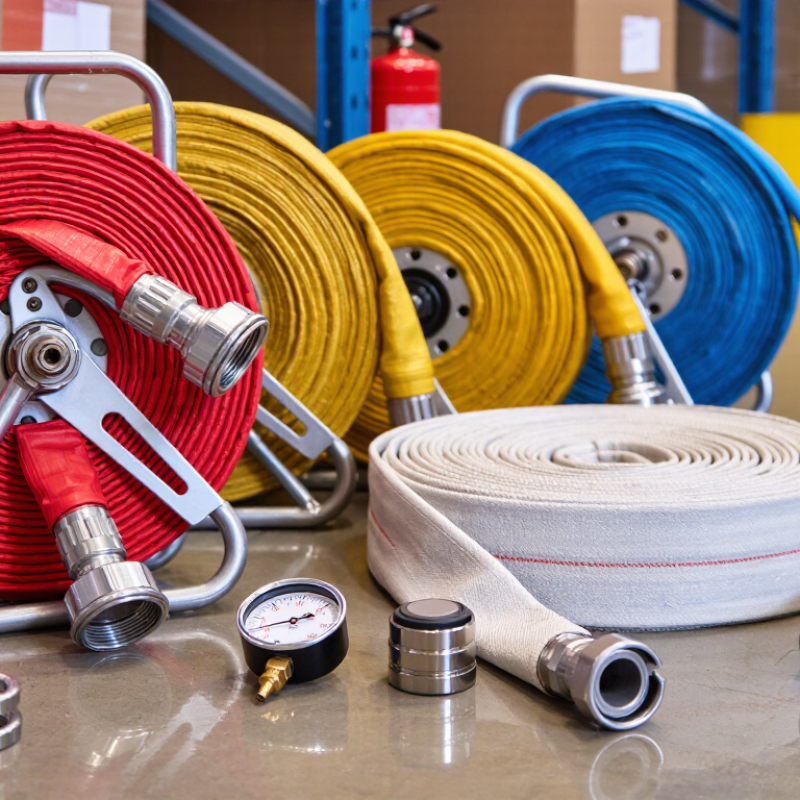
What Makes China a Major Source of Fire Hoses for Global Buyers
China Best Fire Hoses for Global Wholesale Buyers?
China has become a major source of fire hoses because its manufacturing ecosystem is unusually complete. Yarn, rubber compounds, weaving equipment, couplings, and packaging can often be sourced within one industrial region. This shortens production cycles and supports flexible wholesale orders. Buyers can request lay-flat hoses, suction hoses, or high-pressure delivery lines with different linings and jacket materials.
The demand is not theoretical. NFPA’s Fire Loss in the United States During 2023 recorded about 1,504,500 fires and approximately 26.6 billion US dollars in direct property damage. These figures reinforce the need for dependable firefighting equipment. Meanwhile, UN Comtrade data for HS 590900, covering textile hose and similar products, shows China as an active global exporter. Export volume alone, however, proves little. It does not confirm abrasion resistance, coupling quality, or burst performance.
Factory visits and sample testing remain valuable. A serious buyer should check hose diameter, working pressure, burst pressure, lining adhesion, and bend recovery. Ask for batch records and independent test reports. Standards matter, but paperwork can still be incomplete. That caveat matters. Some suppliers offer attractive prices by reducing reinforcement layers or shortening inspection time. The difference may appear only when a hose drags across concrete or faces sustained pressure. China offers scale, technical labor, and competitive manufacturing costs, but supplier verification must remain a practical, repeated process.
China Best Fire Hoses for Global Wholesale Buyers? - What Makes China a Major Source of Fire Hoses for Global Buyers
| Wholesale Evaluation Dimension | Typical Fire Hose Category | Common Technical Data | Relevant Standards or Tests | Why It Matters to Global Buyers |
|---|---|---|---|---|
| Product Coverage | Delivery, attack, suction, reel and hydrant hoses | Flat or rubber-lined constructions; sizes commonly range from approximately 25 mm to 300 mm internal diameter, depending on use | Product-specific performance testing is required; the applicable standard depends on hose type and destination market | A broad manufacturing base allows buyers to source multiple hose types from one supply region while specifying different diameters, lengths and fittings |
| Layflat Delivery Hose | Fire brigade, hydrant and water-transfer delivery hose | Typical nominal sizes include 25, 38, 45, 51, 65, 70, 75, 100 and 150 mm; working pressure commonly specified around 10–20 bar, depending on construction | EN 14540, BS 6391, ISO 14557 or applicable national requirements; hydrostatic, leakage, abrasion and burst tests may apply | Flat storage, comparatively low transport volume and customizable lengths are useful for distributors and emergency-service projects |
| Attack Hose | Manual firefighting hose for hose reels, standpipes and fire engines | Common internal diameters are approximately 25–75 mm; lightweight synthetic jackets or rubber-lined designs are available; pressure ratings must be confirmed by test report | EN 14540, BS 6391, NFPA-related procurement specifications or local fire-service standards | Buyers can balance flexibility, abrasion resistance, weight and pressure performance for different firefighting teams |
| Suction Hose | Hard-suction hose for pumps, drafting and water intake | Common sizes include approximately 50–150 mm; reinforced walls and embedded helixes help resist collapse under suction; length is often supplied in short coupled sections | ISO 14557 and relevant pump or fire-service specifications; vacuum-resistance and leakage tests are essential | Correct vacuum performance is critical because a delivery hose cannot substitute for a properly rated suction hose |
| Hose Reel Hose | Semi-rigid or flexible hose for fixed fire hose reels | Typical nominal internal diameters are about 19–25 mm; common reel lengths are approximately 20–30 m; maximum working pressure is often specified around 10–20 bar | EN 694 or the destination market’s hose-reel requirements; tests may include kinking, pressure, adhesion and dimensional checks | Compact dimensions and consistent flexibility support standardized building, industrial and commercial fire-protection packages |
| Materials and Construction | Synthetic-jacket, PVC, TPU, EPDM, nitrile and rubber-lined hose designs | Typical structures include woven polyester reinforcement, circular-woven jackets, elastomer linings and embedded helical reinforcement for suction hoses | Material compatibility, ozone resistance, abrasion resistance, adhesion and temperature testing should be documented | Material selection can be matched to water, foam solution, oil-contaminated environments, outdoor exposure and required service life |
| Pressure Verification | All fire hose categories | Buyers should compare working pressure, test pressure and burst pressure; these values are not interchangeable and vary by product design | Hydrostatic pressure, burst, leakage and dimensional stability tests should be recorded on inspection documents | Clear pressure documentation reduces the risk of purchasing a hose that is unsuitable for the pump, hydrant or nozzle system |
| Couplings and End Connections | Hoses supplied with threaded, instantaneous, storz-type or other regional couplings | Connection type, nominal size, material, gasket specification and coupling working pressure must match the destination system | Dimensional inspection, pressure testing and compatibility checks with the specified coupling standard | Factory fitting and testing can reduce local assembly work, but buyers must approve drawings and connection samples before mass production |
| Customization Capability | Private-label and project-specific configurations | Customizable parameters may include diameter, length, color, jacket pattern, printing, coupling type, packing and test documentation | A signed technical specification and approved pre-production sample should control the order | Customization helps wholesalers meet local regulations and differentiate product assortments without changing the basic hose platform |
| Quality-Control Documents | Inspection and export documentation for commercial shipments | Recommended documents include material declarations, dimensional records, pressure-test reports, batch traceability and packing lists | Third-party inspection may be arranged when required by the buyer, project owner or destination authority | Documented quality controls make supplier comparison more objective and support customs, tender and warranty requirements |
| Export Logistics | Containerized wholesale shipments | Layflat hoses generally use space-efficient rolls or cartons; final loading quantity depends on diameter, length, coupling type and packaging method | Export packing should protect hose surfaces, couplings and rubber linings from moisture, deformation and contamination | Established industrial supply chains and container shipping infrastructure can support mixed specifications and repeat wholesale orders |
| Buyer Due Diligence | Pre-shipment approval for any fire hose order | Confirm destination standard, working pressure, test pressure, burst requirement, coupling dimensions, temperature range, warranty terms and replacement policy | Use the latest applicable local regulation and request current test evidence for the exact hose construction being purchased | Price alone is not a reliable indicator of suitability; compliance, traceability and verified performance should determine the final selection |
Note: Pressure ranges, dimensions and standards vary by hose construction and destination market. Buyers should verify the exact technical data sheet, certification scope and test report for each shipment.
Related Posts
-

Top 10 Differences Between Fire Hose and Garden Hose
-
How to Choose the Best 4 Fire Hose for Your Needs?
-
2025 Top 10 Fire Hoses for Every Emergency Response Need
-
How to Choose the Best Fire Hose Manufacturers for Your Needs?
-
Top 10 Fire Hose and Garden Hose Manufacturers
-
Top 10 Fire Hoses for Global Buyers in 2026?