Blog 
7 Best Oxygen Sensor Adapters for Easy Installation?
Choosing the right oxygen sensor adapter can turn a frustrating installation into a clean, reliable repair. It can also create new problems when fitment is guessed. Thread size, sensor reach, exhaust clearance, and material quality all matter. A short adapter may leave the sensor exposed to excessive heat. A poorly machined thread can damage an expensive exhaust bung.
Automotive repair educator EricTheCarGuy often emphasizes a practical rule: “Diagnosis should come before replacement.” That principle applies here. An adapter should not hide a failing sensor, exhaust leak, wiring fault, or incorrect fuel mixture. It should solve a genuine installation challenge. Before buying, compare the vehicle’s engine code, sensor position, connector shape, and available clearance. A flashlight and thread gauge can prevent an unnecessary return.
This guide examines seven oxygen sensor adapter options for easier installation. Each choice is considered for construction, compatibility, installation effort, and real-world durability. Some adapters are ideal for tight spaces. Others provide better sensor spacing or help match a modified exhaust system. None is universally perfect. That is the uncomfortable part. Even a highly rated product can fail when its dimensions do not match the vehicle.
Expect practical details, not vague rankings. We will look at stainless steel versus plated steel, bung depth, thread accuracy, heat exposure, and sealing requirements. We will also note when an adapter may be the wrong solution. A careful installation should leave the sensor secure, the wiring clear of hot surfaces, and the engine computer receiving dependable readings.
What Oxygen Sensor Adapters Are and How They Work
7 Best Oxygen Sensor Adapters for Easy Installation?
What Oxygen Sensor Adapters Are and How They Work
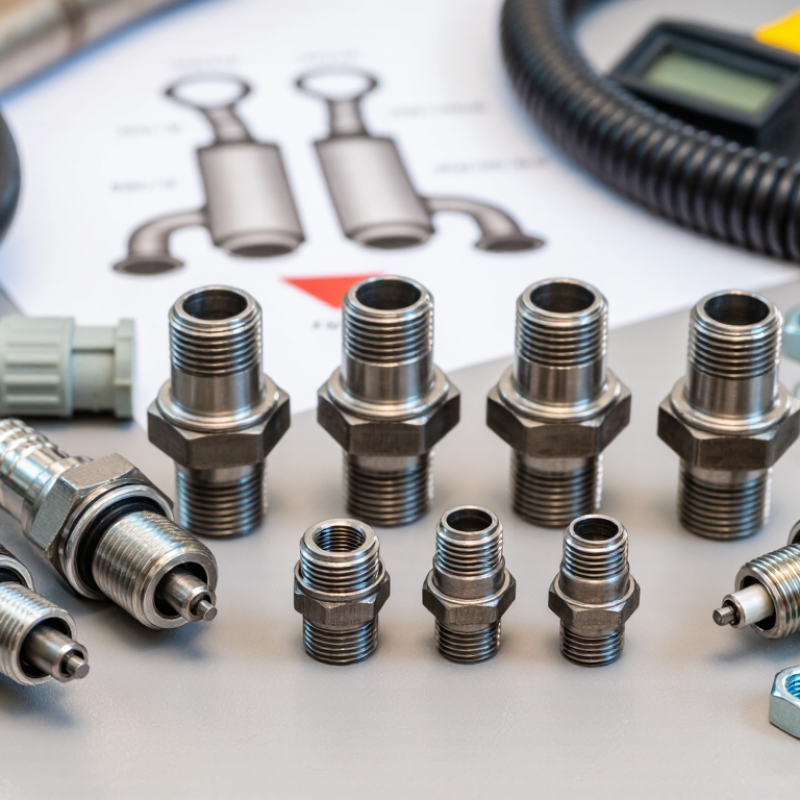
An oxygen sensor adapter is a small threaded fitting that connects a sensor to an exhaust system. It can adjust sensor depth, thread position, or clearance around nearby parts. Most use heat-resistant steel and match common sensor thread sizes. A correct fit matters. Loose threads can create exhaust leaks and false readings.
Some adapters act as spacers. They move the sensor tip slightly away from the strongest exhaust flow. Others provide a 90-degree angle when pipes or heat shields limit access. Extension adapters create extra clearance from hot surfaces. Bung adapters can add a sensor mounting point to a replacement exhaust section. Mini-catalyst-style inserts change the gas flow near the sensor, but their results can vary. Sensor-thread converters handle different thread arrangements. The seventh option is a straight coupler, useful when the original sensor position is simply too short.
Installation should begin with a cool exhaust and a clean threaded opening. Compare the adapter’s thread size with the sensor before tightening anything. Use a suitable high-temperature sealant only where the sensor manufacturer permits it. The sensor tip must not touch the adapter’s inner wall. I have seen rushed installations cause damaged wires and recurring warning lights. That experience changed my approach: measure twice, install once. Even then, an adapter may not solve a faulty sensor, wiring problem, or exhaust leak. After installation, inspect clearance and check for leaks, then confirm stable readings with proper diagnostic equipment.
7 Best Oxygen Sensor Adapters for Easy Installation? - What Oxygen Sensor Adapters Are and How They Work
| Adapter Type | Typical Thread | Typical Dimensions | Common Material | Best Installation Use | Main Advantage | Important Limitation |
|---|---|---|---|---|---|---|
| Straight Oxygen Sensor Spacer | M18 × 1.5 female-to-male | Approximately 25–50 mm long | 304 stainless steel or heat-resistant steel | Adding clearance between the sensor and the exhaust stream | Simple, compact installation with minimal routing changes | May alter sensor response and is not suitable when the sensor already has limited clearance |
| Mini Oxygen Sensor Spacer | M18 × 1.5 female-to-male | Approximately 10–20 mm long | Stainless steel | Tight exhaust locations with limited installation space | Provides a small amount of extra clearance without moving the sensor far from the pipe | Offers less adjustment than a longer spacer and may not solve severe clearance problems |
| 45-Degree Angled Adapter | M18 × 1.5 sensor thread | Approximately 30–60 mm overall length; 45° outlet angle | 304 stainless steel or mild steel | Directing the sensor away from heat shields, chassis parts, or nearby wiring | Improves physical clearance while retaining an M18 × 1.5 sensor connection | The new angle must be checked for cable strain and contact with surrounding components |
| Catalyst-Style Mini Chamber Adapter | M18 × 1.5 female-to-male | Approximately 35–60 mm long; chamber commonly 10–18 mm in diameter | Heat-resistant stainless steel | Applications requiring a small protected sensing chamber | Can reduce direct exposure of the sensor tip to exhaust flow and contaminants | It can slow sensor response or affect emissions-system diagnostics; legality depends on local regulations |
| Weld-In Oxygen Sensor Bung | M18 × 1.5 internal thread | Approximately 8–15 mm wall height; hole sized for the bung body | 304 stainless steel or steel matched to the exhaust pipe | Custom exhaust fabrication or adding a new sensor location | Creates a strong, permanent mounting point with low added length | Requires welding, accurate positioning, and leak testing after installation |
| Dual-Port Oxygen Sensor Bung | Two M18 × 1.5 internal threads | Approximately 50–90 mm between ports, depending on design | Stainless steel or exhaust-grade steel | Installing two sensors in one exhaust section or retaining a service port | Provides flexible sensor placement without drilling multiple separate locations | Needs sufficient pipe wall strength and clearance for both sensors and wiring |
| Sealing Oxygen Sensor Adapter | M18 × 1.5 female-to-male | Approximately 20–45 mm long; sealing seat varies by design | Stainless steel with a machined sealing face | Replacing worn threads or improving the seal at an existing sensor port | Helps accommodate minor thread or sealing-surface wear when correctly matched | Cannot repair severely damaged exhaust threads; thread pitch and sealing style must match exactly |
Note: M18 × 1.5 is a common oxygen-sensor thread specification, but thread size, sensor type, exhaust temperature, clearance, and local emissions requirements should always be verified before installation.
How to Compare the 7 Best Oxygen Sensor Adapter Types
Choosing an oxygen sensor adapter starts with fit, not appearance. The seven common types include straight extensions, angled adapters, spacers, weld-in bungs, universal threaded adapters, offset adapters, and heat-shielded adapters. A straight extension suits tight depth problems, while an angled design helps clear nearby pipes or shields. Spacers can adjust sensor position, but they must not interfere with the vehicle’s intended emissions monitoring. Weld-in bungs provide a firm connection for custom exhaust work. Universal threaded adapters offer flexibility, although their thread quality needs careful inspection. Offset adapters solve alignment issues, and heat-shielded versions protect wiring near high temperatures.
Compare thread size, pitch, material, sensor clearance, and installation method. Stainless steel usually handles repeated heat cycles better than soft metals. Check whether the adapter leaves enough room for the sensor connector and cable. I once underestimated cable movement near a hot pipe, and the installation needed reworking. That mistake was avoidable. Also, confirm the sensor remains exposed to exhaust flow without creating leaks. A reliable adapter should sit firmly, seal evenly, and support normal sensor operation.
Tips: Measure twice before ordering. Use the vehicle’s service data, not guesswork. Inspect the old threads for carbon buildup or damage. Apply only a suitable high-temperature thread treatment, keeping it away from the sensor tip. After installation, check for exhaust leaks and warning lights. If the adapter changes sensor placement, verify its effect with appropriate diagnostic readings. Some designs look convenient but create clearance problems later. Practical testing matters more than a perfect product description.
7 Best Oxygen Sensor Adapters for Easy Installation
Comparison of common oxygen sensor adapter types by the typical number of installation steps required. Lower values generally indicate a simpler installation, while welded solutions require more preparation.
Usually screws between the exhaust bung and sensor, making it one of the simplest options when thread sizes match.
Avoids welding and is useful for temporary or retrofit installations, but correct clamping and sealing are essential.
Provides a strong permanent mounting point, but requires cutting, positioning, welding, and corrosion protection.
The step counts represent the typical mechanical installation sequence for each adapter type. Actual work may vary with access, exhaust condition, thread size, sensor location, and whether welding equipment is available.
Key Compatibility Factors Before Choosing an Adapter
Choosing among the 7 best oxygen sensor adapters starts with compatibility, not appearance. An adapter must match the sensor thread, exhaust port, and available clearance. Most common sensors use standardized threads, but small differences can cause leaks or damaged threads. Check the thread size and pitch with a gauge or the vehicle service manual.
The adapter’s material also matters. Stainless steel handles heat and corrosion well, while softer metals may distort after repeated heating cycles. Measure the sensor angle before ordering. A straight adapter can place the sensor against a heat shield, wiring loom, or underbody panel. Confirm the exhaust pipe diameter and adapter depth too. A deeper design may interfere with internal exhaust flow. That detail is easy to miss.
Tips: Compare the adapter dimensions with the original sensor position. Inspect the sealing surface for burrs. Use a new sealing washer when required. Tighten it to the manufacturer’s torque specification, not by guesswork. Check the wiring afterward, because stretched wires can fail near hot components.
A quality adapter should preserve sensor access and resist vibration. Avoid products with unclear measurements or vague compatibility claims. Installation experience shows that “universal” often means “nearly suitable.” That is not always enough. I would recheck the sensor’s connector, thread engagement, and clearance after installation, even when the first fit looks perfect. A short road test can reveal a small exhaust leak or unexpected contact.
Step-by-Step Guide to Installing an Oxygen Sensor Adapter
Installing an oxygen sensor adapter is easier when preparation comes before turning a wrench. I have found that most problems come from incorrect thread size, limited clearance, or damaged wiring. Check the vehicle service manual and confirm the sensor position before buying one of the seven common adapter styles. Work on a cool exhaust system. Wear gloves and eye protection. Raise the vehicle only with approved supports.
Disconnect the sensor connector carefully, not by pulling the wires. Clean loose rust around the fitting. Remove the old sensor with the correct socket and steady pressure. Do not force it cold. Apply only the thread compound recommended for oxygen sensors, if required. Many sensors already have suitable coating. Too much compound can contaminate the sensing element. Install the adapter by hand first. It should turn smoothly. Stop if the threads feel rough.
Tighten the adapter and sensor to the service manual’s torque specification. Avoid guessing. Connect the wiring away from hot pipes and moving parts. Start the engine and listen for a sharp exhaust leak. Then scan for fault codes after the engine reaches operating temperature. A cleared code is not proof of a successful repair. Drive briefly, recheck the connections, and inspect for soot around the joint. I once rushed this final inspection and found a small leak later. Fitment also varies between vehicles, so an adapter that works well on one exhaust may distort readings on another. Confirm local emissions requirements before installation.
Common Installation Problems, Safety Tips, and Maintenance Checks
7 Best Oxygen Sensor Adapters for Easy Installation?
A suitable oxygen sensor adapter should match the sensor thread, exhaust port, and available clearance. Common installation problems include cross-threading, poor alignment, and damaged wiring. Small leaks matter. Clean carbon from the port before fitting the adapter. Start the threads by hand, then tighten with a calibrated torque wrench. Do not guess. Excessive force can damage the sensor housing or exhaust bung.
Work only on a completely cool exhaust system. Support the vehicle with approved stands, not a jack alone. Keep cables away from hot pipes, moving belts, and sharp brackets. Check local emissions requirements before modifying any exhaust component. An adapter should not defeat required pollution controls. I have seen hurried installations leave wiring touching a heat shield, causing brittle insulation within months. That mistake is easy to miss.
After installation, inspect the adapter during the first few drives. Look for soot marks, ticking sounds, loose threads, or an engine warning light. A smoke test can help locate small exhaust leaks. Check the connector for moisture and confirm that the wire remains relaxed while the engine moves. Carbon buildup may return over time, especially on short-trip vehicles. Remove the sensor only with the correct socket and a controlled twisting motion. Recheck the joint during routine servicing. Perfect installation is not guaranteed. Careful follow-up still prevents many failures.
