Blog 
How to Buy Used Fire Hose for Sale?
Buying used fire hose can stretch a department’s equipment budget, but a low price means little without a clear service history. A hose may look sound on a warehouse floor and still conceal worn lining, damaged couplings, or past heat exposure. Check the details.
NFPA’s report, Fire Loss in the United States During 2023, estimated 1.39 million fires and 3,670 civilian fire deaths that year. Those figures underline why firefighting equipment must be selected carefully; they do not, by themselves, prove that any particular hose is safe. A used fire hose should come with traceable identification, inspection and service-test records, and clear information about its prior use. Ask what testing was performed, when it was completed, and whether the hose matches your intended application. If records are missing, treat that as a real concern.
This guide explains how to compare listings, inspect visible wear, review documentation, and ask sellers useful questions before purchase. A careful review may take longer. It can also reveal when a bargain is not worth the uncertainty. NFPA guidance can inform inspection and testing, but it cannot verify an individual hose’s condition. No verifiable, named expert quotation was provided for this topic, so none is attributed here.
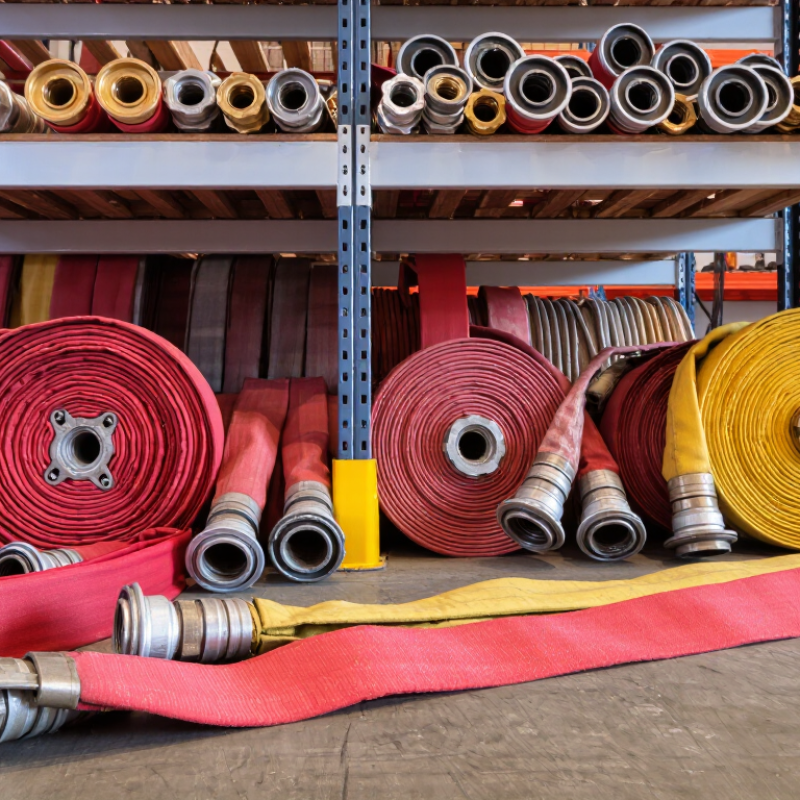
Define the Hose Type: Common Attack Lines Are 1.75 or 2.5 Inches
When buying used fire hose, define the line’s job before judging its price. Common attack lines are 1.75 inches and 2.5 inches. Fire-service training references, including IFSTA’s Essentials of Fire Fighting, use approximate planning flows of 150 gallons per minute for a 1.75-inch line and 250 gallons per minute for a 2.5-inch line. Actual flow changes with nozzle choice, hose length, and operating pressure.
These figures are guides, not guarantees. A narrower line is easier to handle in tight spaces; a larger line can support higher flow but may be heavier when charged.
Check that the hose diameter matches your intended equipment and use. Then ask for its inspection and service-test records. NFPA 1962 calls for annual service testing of in-service fire hose, so a recent, documented test matters more than a clean-looking jacket.
Look closely for soft spots, exposed reinforcement, damaged couplings, and signs of leaking. The inner lining can hide wear. Don’t choose by diameter alone. Flow estimates are easy to overvalue; condition, compatibility, and verified test history deserve equal attention.
Match Hose Diameter, Length, Couplings, and Rated Working Pressure
When buying used fire hose, match diameter to the pump, nozzle, and expected flow—not just the outlet size. A mismatch can restrict flow or require extra adapters. Choose a length that reaches the work area without unnecessary coils; long runs add friction loss. Check every coupling for the correct thread or connection type, tight fit, corrosion, and damaged swivels. Small defects matter. NFPA 1962’s inspection and service-testing guidance treats hose condition and testing as essential checks, not details a seller’s photos can replace. Ask for the hose’s type, age, repair history, and recent test record.
Rated working pressure must suit the system’s intended operating pressure. Do not confuse working pressure with proof or service-test pressure: they describe different limits. NFPA 1962 provides inspection and service-testing criteria for fire hose, while the hose’s own markings and documentation identify its rating. Verify both before purchase. If markings are unreadable, treat the rating as unconfirmed. Look closely at the jacket near bends and couplings; abrasion, soft spots, and exposed reinforcement can be easy to miss. A clean appearance helps little without records. Used hose can be a sensible purchase, but uncertainty about pressure history deserves caution.
How to Buy Used Fire Hose for Sale? Match Hose Diameter, Length, Couplings, and Rated Working Pressure
Common nominal fire hose diameters are shown in millimeters. Confirm the hose’s actual inside diameter and markings before buying; diameter alone does not determine its working pressure or coupling compatibility.
Before purchase: Match the hose length to your setup (for example, 50 ft is 15.24 m and 100 ft is 30.48 m). Check coupling type, size, and condition at both ends. Verify the hose’s marked rated working pressure meets your system’s requirements, and do not mistake test or burst pressure for working pressure.
Request NFPA 1962 Annual Service-Test Records and Repair History
How to Buy Used Fire Hose for Sale?
Before buying, request the hose’s NFPA 1962 annual service-test records and repair history. Each record should identify the hose, test date, result, and service provider. Check that the hose markings match the paperwork. A mismatch can make the history difficult to verify. Ask whether the hose passed its most recent service test and whether it was retested after repairs. Keep copies with your purchase records.
Read beyond the word “passed.” Look for dates, clear test results, and notes about repairs, such as replaced couplings or patched sections. Ask who performed the work and whether the hose was tested again afterward. Then inspect the hose in person, if possible. Feel along its length for soft spots, stiffness, or uneven bulges, and examine couplings for damage. Records are useful, but they cannot show how the hose was stored after its last test. I would not treat paperwork as a guarantee.
Tips: Ask for records tied to the hose’s individual identification, not a generic certificate. Confirm the test date and repair details before paying. If documents are missing or unclear, pause and get an independent assessment. A bargain is less appealing when its history has gaps.
Inspect the Jacket, Liner, and Couplings for Wear, Leaks, or Damage
When assessing used fire hose, inspect it dry and laid straight under bright light. Check the jacket for cuts, burns, soft spots, mildew, exposed yarn, or flattened areas that stay compressed. Flex suspect sections gently; cracking or a brittle feel can signal damage beneath the surface. Small clues matter. Open the hose fully and look for liner blisters, peeling, bulges, or visible separation. A smooth exterior does not prove the liner is sound. NFPA’s 2023 report estimated 1,389,000 fires in the United States, a reminder that hose condition matters in demanding incidents—not evidence that any single inspection prevents loss.
Examine each coupling closely. Look for bent threads, dents, corrosion, loose swivels, damaged lugs, and missing or hardened gaskets. Mate the coupling with a compatible fitting, by hand, and check for smooth engagement without forcing it. Then arrange the applicable service test under NFPA 1962 procedures; visual checks alone cannot confirm pressure integrity. Ask for dated inspection and test records, including repairs and the hose’s known service history. If records are missing, that uncertainty matters. I would not treat a clean appearance as proof of readiness; a hose with unexplained repairs or liner damage should be evaluated by a qualified hose-testing provider before operational use.
Verify Local Acceptance, Warranty Terms, and Total Delivered Cost
Before buying used fire hose, confirm that your local fire department, insurer, or site safety manager will accept it for your intended use. Requirements may differ between training, backup, and active emergency service. Ask what documentation and testing they expect. A seller’s description alone is not proof of suitability. Request the hose’s age, service history, and any inspection or pressure-test records. If records are missing, budget for evaluation by a qualified hose-testing provider. Don’t assume a clean exterior means a reliable hose.
Read the warranty terms closely. Check how long coverage lasts, what defects are included, and who pays return shipping. Some used-hose sales may offer limited or no coverage. Get that in writing before payment. Examine the couplings, lining, and jacket for cracks, corrosion, bulges, or repairs. Small details matter. I’d be cautious about treating a seller’s verbal assurance as a substitute for records; it is an easy detail to overlook.
Compare the total delivered cost, not just the listed price. Add freight, applicable taxes, inspection, testing, replacement couplings, and cleaning if needed. Confirm the hose length, diameter, coupling type, and delivery access before ordering. A low price can lose its appeal after a surprise freight charge. Ask for a written quote showing each cost, plus the delivery date and return conditions. If local acceptance remains uncertain, pause the purchase; saving money is not useful if the hose cannot be used for its planned role.
Related Posts
-
The Ultimate Guide to Choosing the Right Flexible Gas Hose for Your Needs
-
2026 How to Choose Flexible PVC Hose for Your Needs?
-
Best Plastic Hose Options for Efficient Water Delivery?
-
2026 Top Flexible Hose Options for Global Buyers?
-
What is the best heavy duty hose for tough outdoor tasks?
-
Why Choose Used Fire Hose for Your Business Needs?