


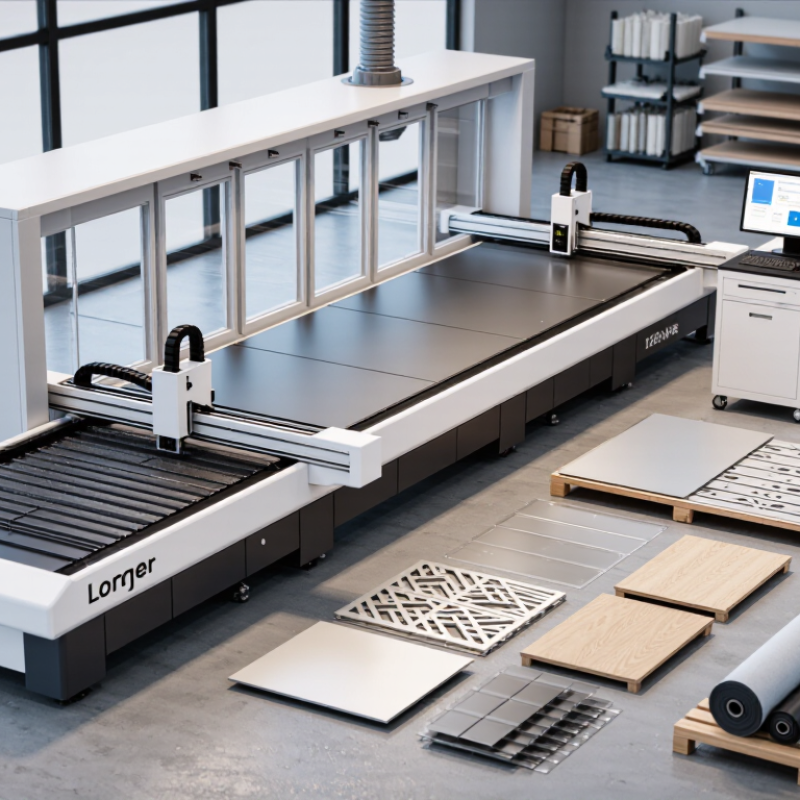
How to Choose a Longer Laser Cutter for Your Business?
A longer laser cutter can improve productivity when your materials exceed standard bed sizes. Start by comparing laser types, not only machine length. CO2 lasers suit wood, acrylic, leather, rubber, and many non-metal sheets. Fiber lasers are designed mainly for metal cutting and engraving. Diode lasers may reduce entry costs, but their lower power limits thickness and speed. Choose according to your daily materials, not occasional projects.
Power affects cutting performance, yet higher wattage is not always better. A powerful CO2 laser can cut thicker plywood, but it may increase energy use and operating costs. Fiber systems can process metal efficiently, although their performance depends on metal type, thickness, focus, and assist gas. Check real production samples before purchasing.
I once underestimated ventilation and material handling space. The cutting bed fit, but the workflow did not.
Tips: Measure your longest sheet, then add room for loading and alignment. Compare cutting speed at your target thickness, not the seller’s thinnest sample. Ask for repeated test cuts, including corners and small holes. Inspect edge quality, smoke residue, and dimensional accuracy. Keep a maintenance budget for lenses, mirrors, filters, and exhaust parts. A longer bed is useful only when the laser source, motion system, and software remain stable across the entire working area. Small details matter.