How to Choose the Right Water Chiller Evaporator?
Selecting the right Water Chiller Evaporator is not a catalogue exercise. It is a decision about heat transfer, water quality, pressure drop, refrigerant compatibility, and long-term service conditions. A unit that looks efficient on paper may struggle when cooling demand changes, tubes collect scale, or the entering water temperature rises above design conditions.
Dr. Armin Hafner, a respected refrigeration technology researcher, offers a useful warning: “A reliable system begins with real operating conditions, not catalogue headlines.” That principle matters on a plant floor. For example, a chiller may be designed for water entering at 12°C and leaving at 7°C. If the actual flow drops, the evaporator can lose efficiency and create unstable temperature control. Small details become expensive.
Start with the cooling load, flow rate, temperature range, and available installation space. Then compare shell-and-tube, brazed-plate, and flooded evaporator designs. Copper tubes may suit familiar maintenance practices, while stainless steel plates can provide a compact footprint. Water hardness, chloride levels, and cleaning access also deserve attention. Ignoring them is a common mistake.
No selection method is perfect. Real systems rarely follow laboratory conditions. A thoughtful specification should therefore include safety margins, monitoring points, and a realistic maintenance plan. Check the pressure drop carefully. Check it again. The best Water Chiller Evaporator balances efficiency with reliability, serviceability, and the actual behavior of the cooling system—not merely its advertised capacity.
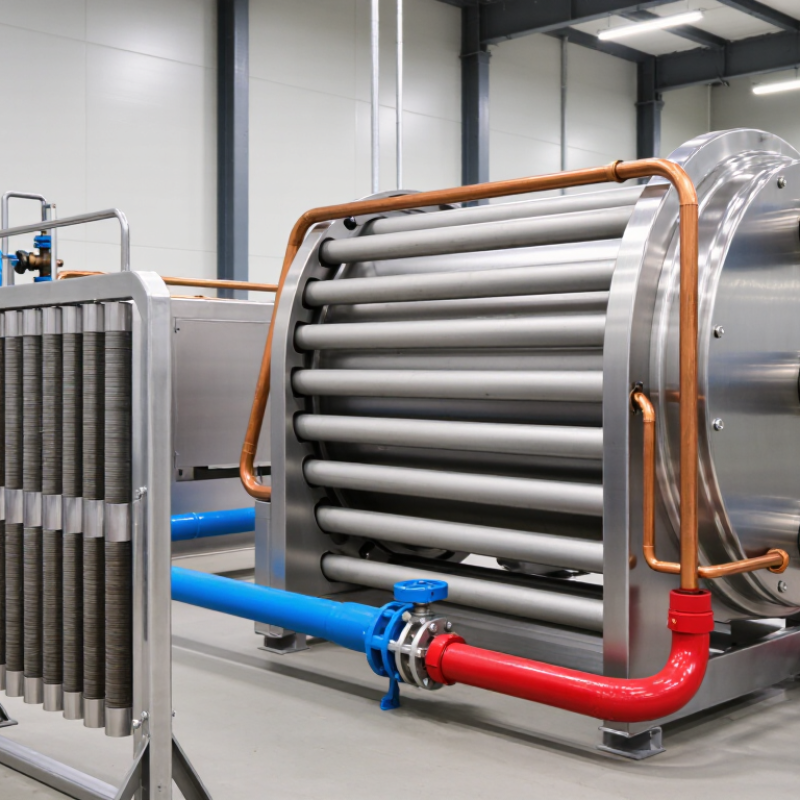
Evaporator Basics and Their Role in Water Chiller Performance
How to Choose the Right Water Chiller Evaporator?
An evaporator is the water chiller’s heat-transfer center. It removes heat from circulating water and transfers it to the refrigerant. The cooled water then returns to the process loop. Simple in principle. Careful selection matters.
Common designs include shell-and-tube, brazed-plate, and flooded evaporators. Shell-and-tube units often tolerate dirty water and allow mechanical cleaning. Brazed-plate models are compact and provide efficient heat transfer, but narrow channels can clog faster. Flooded designs can deliver strong performance, although they usually require more careful refrigerant management. The right choice depends on flow rate, water quality, operating temperature, and acceptable pressure drop.
Start with the actual load, not only the nameplate capacity. Measure entering and leaving water temperatures during peak operation. Check the minimum flow, because low flow can cause freezing or unstable control. Water chemistry also deserves attention. Hard water leaves scale on heat-transfer surfaces, reducing capacity over time. Filtration and proper treatment help, but they are not magic.
In field commissioning, I would inspect temperature sensors, strainers, insulation, and flow switches before judging evaporator performance. Small installation errors can look like equipment failure. A tighter approach temperature may improve efficiency, but it can increase fouling sensitivity. There is no perfect evaporator. Engineers sometimes overvalue compactness and underestimate maintenance access. That trade-off deserves a second look.
Key Factors for Matching Evaporator Capacity to System Requirements
How to Choose the Right Water Chiller Evaporator?
Evaporator capacity must match the system’s real cooling load, not only its advertised rating. Measure the water flow, entering temperature, leaving temperature, and operating hours. A common estimate uses flow rate, water density, specific heat, and the required temperature difference.
For example, a steady 12°C water return and 7°C supply create a 5°C design range. Small errors matter.
Check the load at peak conditions. Outdoor heat, process fluctuations, pump performance, and fouling can change the required capacity. A practical engineer also reviews the refrigerant side, evaporator pressure drop, and minimum flow protection.
Excessive pressure drop can increase pump energy and reduce system stability. Too little flow may cause poor heat transfer or freezing risk.
Keep some design margin, but avoid oversized equipment that short-cycles during light loads.
Field conditions often challenge clean calculations. A spreadsheet may assume constant flow, yet a partially closed valve tells another story. I have seen systems perform poorly because the design used average load instead of the afternoon peak. That mistake is easy to repeat. Confirm sensor accuracy and inspect the water quality before final selection.
The right evaporator should deliver stable outlet temperature, acceptable pressure loss, and reliable performance across changing loads.
Comparing Common Evaporator Designs for Different Chiller Applications
How to Choose the Right Water Chiller Evaporator?
Comparing evaporator designs starts with the chiller’s operating conditions, not the equipment catalog. Shell-and-tube evaporators suit larger systems with steady water flow and moderate maintenance access. Their wide passages tolerate some fouling, while removable heads simplify tube inspection. They also need more installation space. Space is limited.
Brazed plate evaporators are compact and transfer heat efficiently. They work well in packaged chillers, process cooling units, and installations with strict footprint limits. However, narrow channels can react badly to dirty water, poor filtration, or freezing. Water treatment and flow control become essential. Maintenance is less forgiving. A small blockage may increase pressure drop and reduce capacity quickly.
Flooded and falling-film designs can improve refrigerant-side performance in larger, efficiency-focused systems. Flooded evaporators maintain strong heat transfer, but they require careful refrigerant management and oil return control. Falling-film units may use less refrigerant, yet uneven distribution can reduce performance during low-load operation. Field practice shows that part-load behavior deserves more attention than rated capacity. The best design also depends on entering-water temperature, leaving-water stability, allowable pressure drop, and service skills. One common mistake is choosing the smallest evaporator available. It may save space initially, but restricted flow and limited fouling tolerance can create expensive operating problems. No design wins every site. Practical selection should include filtration quality, freeze protection, inspection access, and actual load patterns.
Checking Efficiency, Reliability, Maintenance, and Total Operating Cost
Choosing a water chiller evaporator requires more than comparing rated efficiency. The U.S. Energy Information Administration’s 2018 CBECS data assigns about 9% of commercial building energy use to cooling. That makes small evaporator losses financially important. Check the approach temperature, water-side pressure drop, and performance at part load. AHRI Standard 550/590 supports integrated part-load evaluation, not only full-load comparison. A unit with excellent laboratory efficiency may perform poorly when water quality, flow, or load changes.
Reliability depends on practical details. Select tube materials that match the water chemistry and operating temperature. Ask for fouling allowances, inspection access, and documented leak-testing procedures. The ASHRAE Handbook identifies fouling and poor flow control as common causes of heat-transfer decline. Maintenance records should show cleaning intervals, pressure readings, and temperature differences. However, field conditions are rarely perfect. A sophisticated evaporator still needs disciplined commissioning and operators who notice gradual performance changes.
Tips: Calculate total operating cost before purchase. Include electricity, water treatment, cleaning labor, downtime, replacement parts, and disposal. Compare annual energy use under actual load profiles. IEA’s The Future of Cooling reports that cooling energy demand could more than triple by 2050, increasing the value of durable efficiency. Do not trust one attractive efficiency number. A slightly cheaper evaporator can become expensive after repeated cleaning or unexpected shutdowns. Recheck the assumptions.


