Blog 
What Is a Flexible Gas Hose and How Does It Work?
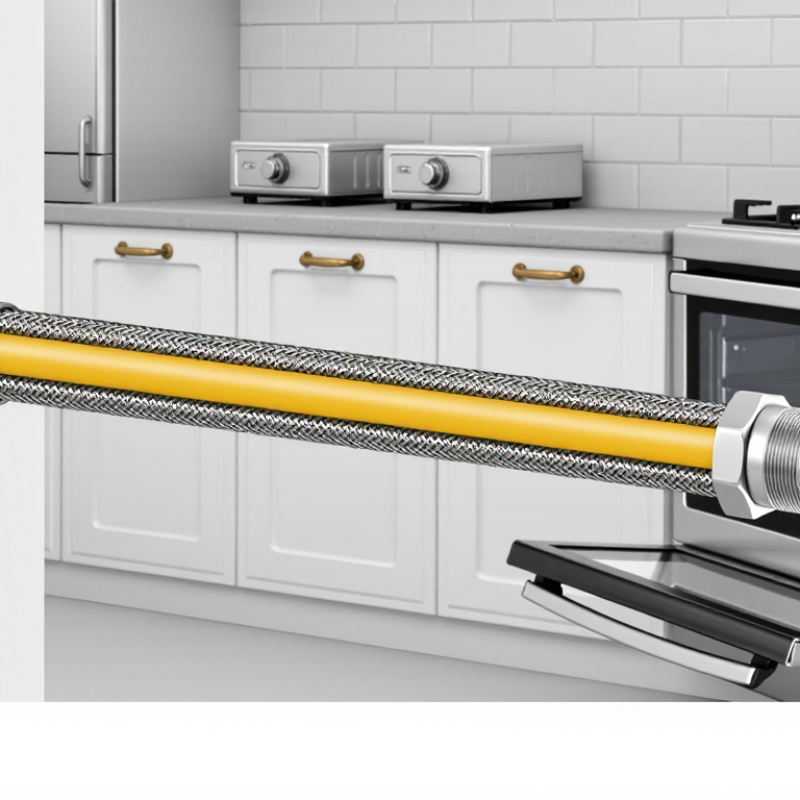
A flexible gas hose is a short, engineered connection between a gas appliance and a fixed supply pipe. It usually combines a stainless-steel braid, an inner gas-resistant tube, and threaded end fittings. The braid limits stretching. The inner tube carries the fuel. The fittings create the seal.
It sounds simple. It is not.
According to the International Energy Agency’s Gas Market Report 2024, global gas demand continues to expand, increasing the importance of dependable distribution and appliance connections. Market research from Grand View Research also identifies industrial hose demand as a growing sector, driven by safety requirements, replacement cycles, and infrastructure upgrades. These reports do not measure every household hose, but they show the wider pressure for reliable gas-transfer components.
Gas-safety engineer Paul F. Horgan explains, “A hose should provide controlled movement, never compensate for poor installation.” That principle matters when an oven shifts slightly, a cabinet vibrates, or a connector bends behind a cooker. A compliant flexible gas hose absorbs limited movement while maintaining a stable gas path. It should not be twisted, stretched, painted, trapped, or exposed to excessive heat. Standards such as EN 14800, ISO 10380, and applicable national certification rules help define performance, construction, and testing expectations. However, standards alone cannot correct careless fitting. That is where this subject becomes less comfortable. Product labels can look reassuring. Installation details still decide safety. This guide explains how a flexible gas hose works, what its components do, and which warning signs deserve attention before a connection is used.
Definition and Purpose of a Flexible Gas Hose
A flexible gas hose is a purpose-built connector between a fixed gas supply pipe and an appliance. It usually has a corrosion-resistant metal body, threaded fittings, and an internal passage designed for fuel gas. Its main purpose is controlled movement. The hose allows an oven, heater, or outdoor cooker to move slightly for cleaning, servicing, or vibration. It should not replace permanent piping or support an appliance’s weight.
The U.S. Energy Information Administration reported about 4.2 trillion cubic feet of residential natural gas consumption in 2023. That figure shows the scale of household gas use, but it does not make every connection safe. A suitable hose must match the gas type, pressure rating, fitting size, length, and appliance instructions. It should remain visible and accessible. Sharp bends, twisting, heat exposure, and contact with moving edges can damage its protective layers.
Keep it straight.
During field inspections, installers often check the fittings before checking the hose body. That habit deserves reconsideration. A loose connection may leak without obvious damage. The National Fire Protection Association’s Home Structure Fires research identifies cooking equipment as a leading source of residential fires, reinforcing the need for careful appliance connections. Leak testing should follow approved procedures, and installation should comply with applicable fuel-gas codes. Never extend a hose through a wall, ceiling, cabinet partition, or floor. Flexibility helps movement, not concealment.
Main Components and Materials Used in Its Construction
What Is a Flexible Gas Hose and How Does It Work?
A flexible gas hose transfers fuel gas between a fixed supply line and an appliance. Its construction matters more than its simple appearance. The inner tube usually uses gas-resistant rubber or thermoplastic materials. This layer prevents fuel from attacking the hose wall. A braided stainless-steel or textile reinforcement surrounds it. That braid controls expansion and improves resistance to pressure, bending, and accidental pulling.
The outer cover protects against abrasion, moisture, heat, and ultraviolet exposure. Many assemblies also include threaded fittings, ferrules, gaskets, and strain-relief sleeves. Corrugated stainless-steel hoses use formed metal instead of a rubber inner tube. They can tolerate higher temperatures, but repeated sharp bending may still cause fatigue. Flexible does not mean indestructible.
The World LPG Association’s 2023 statistical review states that more than three billion people use LPG worldwide. This scale makes reliable hose construction a practical safety issue, not a minor detail. The International Energy Agency’s 2023 energy access report also links cleaner household fuels with safer cooking conditions. During inspection, technicians should check discoloration, cracking, crushed sections, loose fittings, and unusual stiffness. A leak test must follow the applicable local standard.
One field lesson is easy to miss. The fitting often fails before the hose body. I would not trust appearance alone. Material compatibility, installation radius, temperature, and service age all deserve attention. Even a strong braid cannot correct poor installation.
How a Flexible Gas Hose Transfers and Controls Gas
What Is a Flexible Gas Hose and How Does It Work?
How a Flexible Gas Hose Transfers and Controls Gas
A flexible gas hose carries fuel gas from a fixed supply pipe to an appliance connection. Its inner tube contains the gas, while outer layers resist pressure, movement, and surface damage. End fittings create a sealed path between the hose, shutoff valve, and appliance inlet. The hose itself does not regulate gas pressure. A regulator or control valve performs that task.
Inside the line, gas moves because pressure differs between the supply and appliance. Opening the appliance valve allows gas to flow through the hose. The flow rate depends on pressure, hose diameter, length, and the appliance demand. A narrow or sharply bent hose can restrict delivery. The result may include weak flames, delayed ignition, or unstable operation. The simple picture is incomplete.
In practical inspections, position matters as much as material quality. The hose should remain visible, gently curved, and free from twisting or crushing. Keep it away from hot surfaces, sharp edges, and moving parts. A small bend can matter more than expected. Qualified technicians should check fittings, pressure, and leak tightness during installation or service. Never test a suspected leak with a flame. Approved leak-detection methods are safer. Replace a hose showing cracks, corrosion, bulges, or damaged threads. Controls should remain accessible, not hidden behind the appliance.
Common Types and Applications of Flexible Gas Hoses
Flexible gas hoses connect a fixed gas supply to an appliance that may move slightly during use. They are designed to bend without crushing the gas passage. Corrugated stainless steel hoses resist heat and physical damage. Rubber hoses remain flexible and suit some low-pressure connections. Thermoplastic hoses are lightweight and often used for portable equipment. Each type requires the correct fuel compatibility, pressure rating, and connection size.
A hose carries natural gas or liquefied petroleum gas through an internal passage. Its fittings create a sealed connection at both ends. When the appliance operates, gas pressure pushes fuel through the hose to the burner. Common applications include cookers, water heaters, space heaters, outdoor cooking equipment, and recreational vehicles. Commercial kitchens may use longer assemblies, but movement and heat exposure must be controlled. In practice, neat theory meets messy walls and awkward appliance positions.
Tips: Check the hose label before installation. Do not stretch, twist, paint, or sharply bend it. Keep it away from flames, hot surfaces, and moving doors. Replace hoses showing cracks, corrosion, stiffness, or damaged fittings. A leak test should be completed after installation by a qualified professional. Never assume one connector fits every appliance. That assumption causes avoidable problems. Local standards also differ, so installation guidance should be verified before work begins.
What Is a Flexible Gas Hose and How Does It Work?
Flexible gas hoses transport natural gas or LPG between a fixed supply line and an appliance while allowing movement, alignment, and vibration absorption. The chart compares representative temperature ranges commonly specified for major hose constructions used in gas service.
Typical temperature ranges vary by material, certification, pressure rating, and installation requirements. Always follow the hose manufacturer's specifications and applicable local gas regulations.
Safety Standards, Installation, and Maintenance Requirements
A flexible gas hose connects a fixed gas supply to an appliance that may move slightly during cleaning or servicing. Its corrugated metal body bends without sharp kinks. End fittings create the sealed connection. It is not a substitute for rigid piping inside walls.
Safety begins with approved components. ANSI Z21.24/CSA 6.10 covers appliance gas connectors in North America, while NFPA 54 provides installation guidance for fuel-gas systems. The connector should be listed for the fuel type, pressure, and appliance. It must remain visible and accessible. Do not run it through walls, floors, cabinets, or ceilings. Keep it away from hot surfaces, sharp edges, and moving parts. NFPA’s Home Structure Fires report found cooking equipment caused 53% of reported home structure fires from 2017 to 2021. A small connection near a range deserves serious attention.
Installation should include a shutoff valve, correct pipe sealant, and gentle alignment. Never stretch the hose. Never use it as a handle. A qualified technician should check for leaks with an approved detection solution after opening the valve. Flames are unsafe for testing. The fitting should show no bubbles.
Inspect the hose during appliance servicing. Look for rust, crushing, abrasion, discoloration, or a gas odor. Replace damaged connectors immediately. Many manufacturers specify replacement after removal or within a stated service period. That detail is easy to overlook. Even experienced installers can miss hidden stress behind an appliance. Photographs and a written inspection date improve maintenance records, but local code remains decisive.
| Data Dimension | What It Means | Typical Characteristics | Safety and Installation Requirements | Maintenance Guidance |
|---|---|---|---|---|
| Product Definition | A flexible gas hose is a certified, movable connection used to convey fuel gas between a fixed gas supply and an appliance or gas component. | It is designed to accommodate limited movement, alignment, or appliance servicing without using a rigid pipe connection alone. | Use only a hose or connector specifically approved for the intended fuel gas, pressure, appliance type, and installation location. | Replace the hose if it shows damage, deterioration, leakage, or an expired service life specified by the applicable product instructions. |
| Common Construction | Flexible gas connections may be made from metallic tubing, stainless steel, coated metal, or other materials approved for gas service. | Many appliance connectors use a flexible metal tube with protective fittings and threaded end connections. Corrugated stainless steel tubing is commonly used in some building gas distribution systems. | The material and fittings must be compatible with the gas type and must comply with the applicable local building and fuel-gas requirements. | Do not paint, modify, splice, repair, or cover the hose unless the manufacturer and applicable code expressly permit it. |
| How It Works | Gas flows through the internal passage while the flexible wall and end fittings maintain a sealed connection. | The hose bends within its permitted radius and absorbs small amounts of movement or vibration. It is not intended to support the appliance or compensate for major misalignment. | Keep the hose free from sharp bends, twisting, stretching, crushing, heat damage, and contact with moving or abrasive surfaces. | Check that the hose remains naturally aligned and is not under tension or compressed against a wall, cabinet, or appliance. |
| Typical Applications | Flexible connections are commonly used for movable gas appliances and, where permitted, for portions of gas piping systems. | Examples include cooking appliances, clothes dryers, outdoor cooking equipment, and certain heating or utility appliances. | The connector must be suitable for the appliance category and must not pass through walls, floors, ceilings, partitions, or concealed spaces unless specifically designed and approved for that use. | Keep the connection accessible for inspection, shutoff, servicing, and leak testing. |
| Applicable Safety Standards | Safety requirements depend on the country, jurisdiction, fuel type, appliance, and hose design. | Relevant rules may include the local fuel-gas or plumbing code, national product standards for appliance connectors, and listing or certification requirements for flexible gas tubing systems. | Follow the current requirements adopted by the local authority having jurisdiction. A general-purpose water, air, or hydraulic hose must never be used for gas. | Keep the installation documentation, product markings, certification information, and inspection records available where required. |
| Gas Compatibility | The hose must be rated for the specific fuel gas supplied to the appliance. | Natural gas, propane, and other fuel gases can have different operating conditions and compatibility requirements. | Verify the appliance rating, gas type, pressure, connector rating, and fitting configuration before installation. Never assume that one hose is suitable for every gas service. | Investigate any odor of gas, abnormal flame, pressure problem, or appliance performance change immediately. |
| Pressure and Temperature Rating | The pressure and temperature rating defines the safe operating range of the hose and its fittings. | Ratings are stated by the product manufacturer and may vary by connector construction, size, and intended application. | Do not exceed the marked or documented pressure and temperature limits. Maintain adequate clearance from burners, flues, hot surfaces, and other heat sources. | Inspect for discoloration, melted coatings, hardened materials, deformation, or other evidence of overheating. |
| Shutoff Valve | A manually operated shutoff valve controls gas flow to the appliance. | The valve is normally installed upstream of the flexible connector and should be readily accessible. | Close the valve before installation, removal, or servicing. The valve must be appropriate for gas service and installed in accordance with local requirements. | Operate and inspect the valve periodically as permitted by the equipment instructions. Do not force a seized or damaged valve. |
| Fittings and Connections | End fittings create the sealed transition between the gas piping, shutoff valve, and appliance inlet. | Connections may use approved threaded fittings or other specified connection methods. Fitting dimensions and sealing methods must match. | Use the correct fitting type and approved sealing method. Do not use thread sealant or tape where the product instructions prohibit it, and never use sealing material on flare sealing surfaces. | Do not retighten or disturb fittings without following the correct procedure. A qualified professional should repair or replace leaking connections. |
| Installation Position | The hose should connect the appliance without excessive movement or mechanical stress. | It should form a smooth, unrestricted curve and remain clear of appliance wheels, drawers, doors, sharp edges, and pinch points. | Do not install the hose through a wall, floor, ceiling, or concealed cavity unless the specific system is approved for that installation. Do not use the hose as a structural support. | Recheck the routing after moving or servicing the appliance to ensure the hose has not been kinked, stretched, or trapped. |
| Leak Testing | Leak testing confirms that the complete connection is gas-tight after installation or disturbance. | Testing is typically performed at the required system pressure using an approved method and suitable leak-detection solution or instrument. | Never use a flame to locate a gas leak. If a leak is suspected, stop using the appliance, shut off the gas if safe to do so, ventilate the area, and contact qualified personnel or emergency services as appropriate. | Repeat leak testing after disconnection, reconnection, replacement, or any work that may affect the gas connection. |
| Routine Inspection | Visual inspection helps identify conditions that can lead to leakage or failure. | Look for kinks, corrosion, abrasion, cracks, dents, flattening, loose fittings, heat damage, and contact with chemicals or sharp surfaces. | Do not place the appliance back into service if the connector is visibly damaged or if gas odor is present. | Inspection frequency should follow local rules, appliance instructions, and the recommendations for the specific connector or tubing system. |
| Replacement Criteria | A flexible gas hose should be replaced when its integrity, compatibility, or certification cannot be confirmed. | Replacement may be necessary after physical damage, fire, severe corrosion, unauthorized modification, repeated disconnection, or an unknown installation history. | Use a new, correctly sized, approved connector rather than joining or extending old and new hoses together. | Follow the product’s stated replacement interval or service-life guidance where one is provided. When no reliable history exists, obtain an assessment from a qualified gas professional. |
| Professional Installation | Gas work may require specialized knowledge, tools, testing, permits, or inspection. | Requirements vary by jurisdiction and may distinguish between appliance connectors and building gas piping systems. | Installation, alteration, pressure testing, and commissioning should be performed by a qualified, authorized professional whenever required by local law or when the work involves gas piping. | Keep records of installation, testing, repairs, and replacement for future servicing and safety inspections. |
Related Posts
-
10 Best Flexible Gas Hoses for Safe and Efficient Gas Supply
-
10 Essential Tips for Choosing the Best Quality Garden Hose for Your Needs
-
2026 Best Types of Industrial Hoses for Global Buyers?
-
Top 10 Heavy Duty Hoses for Global Buyers to Consider?
-
What is a Fire Hose and How Does It Work?
-
What is a Hose Manufacturer and What Do They Do?