


Blog 
Top Auto Arc Welding Machines for Global Buyers
Global manufacturing is moving toward faster, repeatable, and more traceable welding systems. The International Federation of Robotics reported 541,302 industrial robots installed worldwide in 2023. Automotive production remained a major driver. This trend makes the Auto Arc Welding Machine increasingly relevant for factories seeking stable output, lower rework, and safer operator workflows.
Market forecasts also show sustained expansion. MarketsandMarkets projects the global welding equipment market to grow from approximately USD 16.7 billion in 2023 to USD 24.0 billion by 2028. However, market size alone does not guarantee a suitable machine. Buyers must examine arc stability, duty cycle, wire-feeding accuracy, power efficiency, software compatibility, and after-sales support.
Details matter.
Dr. John C. Lippold, a recognized welding metallurgy expert at The Ohio State University, explains, “Welding is a complex process involving heat transfer, fluid flow, solidification, and solid-state transformations.” His observation remains practical for equipment selection. A machine may look powerful on paper, yet produce inconsistent beads under long production cycles. Actual performance depends on material thickness, joint design, shielding gas, operator training, and maintenance discipline.
This guide compares leading Auto Arc Welding Machine options for global buyers. It considers industrial capability, regional service access, certification expectations, and total ownership cost. Some specifications are difficult to compare directly. Published figures may use different testing conditions. Buyers should verify critical claims through demonstrations, sample welds, and documented references before making a final decision.
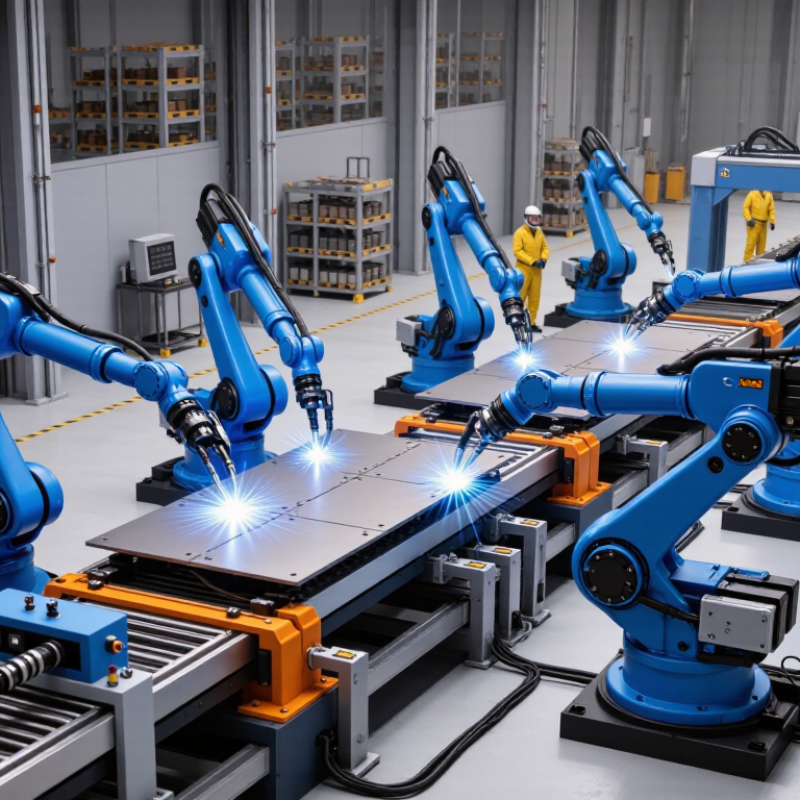
What Are Automatic Arc Welding Machines and How Do They Work?
Automatic arc welding machines join metal by creating an electric arc between an electrode and the workpiece. This arc produces intense heat, melting the joint area and, when required, a filler wire. As the torch moves, the molten metal cools into a permanent weld. The principle is simple.
A typical system contains a power source, wire feeder, welding torch, work clamp, controller, and protective shielding system. The machine follows programmed travel speed, current, voltage, and torch position. Sensors may monitor arc length or wire feeding, helping maintain stable welds. In MIG or MAG welding, continuous wire feeds through the torch while shielding gas protects the molten pool. Submerged arc systems use granular flux for longer, high-deposition welds. Process selection depends on material, thickness, joint design, and production volume.
For global buyers, practical checks matter. Review duty cycle, input voltage, wire diameter range, travel speed, fixture compatibility, and service documentation. In workshop trials, clean contact surfaces often reduce arc instability and porosity. Small errors matter. Automation improves repeatability, but it cannot repair poor joint preparation or incorrect settings. That limitation is easy to overlook. Even experienced operators should verify sample welds, penetration, surface appearance, and dimensional accuracy before full production. A detailed operating manual and accessible technical support also improve reliability over time.
Top Auto Arc Welding Machines for Global Buyers - What Are Automatic Arc Welding Machines and How Do They Work?
| Machine Type | Arc Welding Process | Typical Welding Current | Typical Material Thickness | Automation Method | Typical Travel Speed | Recommended Applications | Key Advantages |
|---|---|---|---|---|---|---|---|
| Robotic GMAW Cell | MIG/MAG, gas metal arc welding | 100–400 A | 1.5–20 mm, depending on joint design and passes | Programmable robotic arm with wire feeder, positioner and shielding-gas system | 200–1,000 mm/min | Automotive parts, fabricated frames, machinery and repetitive steel assemblies | High repeatability, consistent torch movement and reduced manual handling |
| Mechanized FCAW System | Flux-cored arc welding | 180–500 A | 6–30 mm, commonly completed in multiple passes | Motorized carriage or boom with automatic wire feeding and travel control | 150–700 mm/min | Heavy fabrication, structural steel, shipbuilding and outdoor steelwork | High deposition rate and good performance on thicker carbon and low-alloy steels |
| Automatic SAW Tractor | Submerged arc welding | 300–1,500 A | 8–100 mm, depending on single- or multi-wire configuration | Motorized tractor or gantry with flux hopper, wire feeder and seam-tracking controls | 100–1,500 mm/min | Pressure vessels, beams, storage tanks, rails and long straight seams | Very high deposition rate, deep penetration and low arc exposure for operators |
| Automatic GTAW Orbital System | TIG, gas tungsten arc welding | 20–250 A | 0.5–6 mm wall thickness for many tube and pipe applications | Programmable orbital torch, controlled wire feed and closed-loop current adjustment | 40–300 mm/min | Stainless tubing, pharmaceutical piping, food-processing lines and clean-room systems | Precise heat control, clean welds and repeatable circumferential joints |
| Automatic Plasma Arc System | Plasma arc welding | 5–300 A | 0.5–10 mm, commonly used for precision welds | CNC motion table or programmable torch with plasma-gas and shielding-gas controls | 50–500 mm/min | Aerospace components, stainless assemblies, precision tubing and thin sheet | Narrow arc, concentrated heat input and strong penetration control |
| Automatic Stud Welding Unit | Drawn-arc or capacitor-discharge stud welding | 300–2,500 A, depending on stud diameter and process | Base materials commonly from 3 mm upward | Automatic stud feeder, positioning head and programmable welding controller | Approximately 5–30 studs/min | Construction decks, boilers, insulation pins, electrical cabinets and composite structures | Fast attachment of studs with minimal surface preparation and low distortion |
How Automatic Arc Welding Machines Work
An automatic arc welding machine controls the welding arc, travel speed, wire or electrode feed, shielding gas, heat input and sometimes torch position through a programmed controller. Sensors, seam trackers or positioners can help maintain the correct joint path. The arc melts the base metal and, where applicable, filler metal to form a fused weld after cooling.
| Selection Factor | Typical Requirement | Why It Matters |
|---|---|---|
| Power Supply | Common industrial inputs include 380–480 V, three-phase, 50/60 Hz | Voltage, frequency and phase compatibility must match the installation site |
| Duty Cycle | Often specified at 40% or 60% over a 10-minute test period | A higher duty cycle supports longer welding periods at the rated current |
| Control and Connectivity | PLC or CNC control, job storage, digital parameters and optional industrial networking | Improves repeatability, production tracking and integration with factory systems |
| Safety Equipment | Welding enclosure, emergency stop, interlocks, fume extraction and appropriate PPE | Reduces exposure to arc radiation, fumes, heat, sparks and moving equipment |
| Consumables and Service | Compatible wire, electrodes, shielding gases, contact tips, liners and replacement parts | Local availability affects operating cost, uptime and long-term maintainability |
Note: Performance ranges are representative planning values. Actual capacity, travel speed, duty cycle and material thickness depend on joint geometry, welding position, consumables, material grade, cooling method and applicable welding standards.