Blog icon

Top 10 Industrial Hose Manufacturers for Global Buyers

Choosing among industrial hose manufacturers requires more than comparing prices, catalog sizes, or polished websites. Global buyers must examine material compatibility, pressure ratings, temperature limits, reinforcement design, and documented testing. A hose carrying abrasive slurry behaves differently from one handling steam, chemicals, food products, or hydraulic oil. Small details matter. A missing cover specification can become an expensive failure.

Dr. James Reason, a leading industrial-safety expert, wrote, “We cannot change the human condition, but we can change the conditions under which humans work.” His principle applies directly to hose procurement. Better specifications, clearer traceability, and disciplined inspections reduce avoidable risks. Buyers should review ISO certifications, factory quality systems, batch records, and technical support before placing large orders. Manufacturing capacity also deserves attention. A supplier may produce excellent samples but struggle with urgent replacement volumes. That possibility is easy to overlook.

This guide evaluates the top 10 industrial hose manufacturers for global buyers through a practical lens. It considers product range, engineering expertise, customization, production consistency, delivery capability, and after-sales support. Regional service networks also matter when a hose fails beside a busy loading dock or remote processing line. No ranking can remove uncertainty. That limitation matters. Product data may vary by market, model, and application. Buyers should still request current certificates and confirm specifications with qualified engineers. The strongest manufacturer is not always the largest. It is the one that understands the application, communicates clearly, and performs reliably after the purchase.
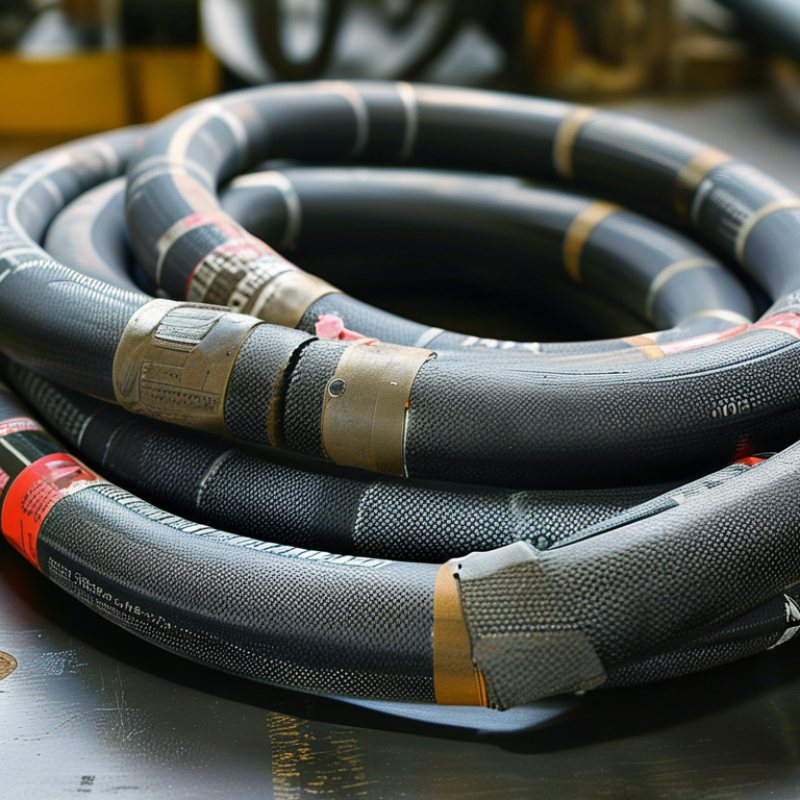
Top 10 Industrial Hose Manufacturers for Global Buyers

Industrial Hose Manufacturing: Scope, Products, and Global Market Role

Top 10 Industrial Hose Manufacturers for Global Buyers

Industrial Hose Manufacturing: Scope, Products, and Global Market Role

Industrial hose manufacturing supports chemical processing, construction, agriculture, mining, food production, and energy services. Factories produce hoses for water, air, oil, steam, chemicals, abrasive materials, and food-grade transfer. Each application demands different reinforcement, lining, flexibility, and temperature resistance.

Manufacturers commonly use rubber, thermoplastic compounds, fabric layers, steel wire, and textile reinforcement. Production may include extrusion, braiding, spiral assembly, curing, cutting, and pressure testing. Reliable facilities document material batches and inspect hose dimensions. They also test burst pressure, vacuum resistance, abrasion, and leakage. Small details matter. A weak fitting can damage an otherwise excellent hose.

For global buyers, manufacturing scope includes custom lengths, end connections, pressure ratings, and regional documentation. Experienced suppliers should explain operating limits in clear technical language. They should also provide traceability, inspection records, packaging controls, and practical installation guidance. International logistics add challenges, including moisture protection, labeling, lead times, and replacement planning.

A strong manufacturer understands the complete hose lifecycle, not only factory output. Engineers may review bending radius, movement frequency, chemical exposure, and cleaning methods before recommending a design. Still, no production process is perfect. Specifications can be misunderstood, and field conditions may change. Buyers should verify samples, test reports, and actual service requirements before placing large orders. That careful step often prevents costly downtime.

How to Evaluate Industrial Hose Manufacturers for International Purchasing

Choosing an industrial hose manufacturer for international purchasing requires more than comparing prices. Check its production experience with your media, pressure range, temperature, and installation environment. A hose for abrasive slurry needs different reinforcement from one used for compressed air. Ask for evidence, not broad claims.

Request technical datasheets, material specifications, burst-pressure results, and inspection records. Confirm that dimensions, coupling methods, and tolerances match your equipment. Reliable manufacturers should explain testing procedures and provide traceability from raw material to finished hose. Independent laboratory reports can strengthen confidence, but unclear report dates deserve questions. Details matter.

Evaluate export capability as carefully as manufacturing quality. Review packaging for long-distance transport, labeling accuracy, lead-time control, and responses to technical questions. Ask how the manufacturer handles nonconforming products and replacement requests. A professional answer should include a process, not only an apology. Sample testing is essential, although one successful sample cannot represent every production batch. I have seen polished catalogs hide weak documentation. That mistake is easy to make. Visit the facility when possible, or arrange a live production audit through a qualified inspection agency. Keep written records of approvals, test conditions, and agreed specifications. Clear communication may feel slow, yet it prevents expensive misunderstandings across borders.

Top 10 Industrial Hose Manufacturers and Their Core Strengths

Global industrial hose demand is expanding with mining, chemicals, food processing, and energy projects. MarketsandMarkets estimates the industrial hose market could grow from about USD 13.7 billion in 2023 to USD 17.5 billion by 2028. That growth rewards manufacturers with focused capabilities, not merely broad catalogs. No ranking is perfectly universal.

The strongest ten manufacturer groups usually stand out through distinct core strengths. Some specialize in high-pressure hydraulic assemblies and tested crimping. Others focus on chemical resistance, using multilayer rubber or thermoplastic compounds. Several lead in abrasive-material transfer for mines and quarries.

Food-grade producers emphasize smooth interiors, traceability, and hygienic cleaning. Marine specialists design for saltwater, vibration, and tight routing. Oil-transfer experts prioritize electrical continuity and controlled bend radii. Fire-resistant hose makers serve demanding industrial environments.

Lightweight composite hose suppliers reduce handling strain. Custom fabricators excel at unusual lengths, couplings, and pressure ratings. Global distributors add value through regional stock and technical support.

The Freedonia Group identifies replacement demand and infrastructure maintenance as important hose-market drivers. Buyers should therefore examine service life, not only purchase price. ISO 1402 pressure testing, ISO 3861 rubber hose guidance, and documented batch records improve supplier reliability. Field experience still matters. A hose may meet laboratory pressure requirements yet fail early when routing is too tight, temperature changes rapidly, or operators drag it across concrete. This is where supplier advice becomes measurable value. One weakness remains: published market estimates differ by product scope and regional coverage. Careful buyers should verify certifications, test reports, warranty terms, and local response times before selecting among leading manufacturers.

Comparing Product Quality, Certifications, Customization, and Delivery

Top 10 Industrial Hose Manufacturers for Global Buyers

Selecting the top ten industrial hose manufacturers requires more than comparing catalog prices. Grand View Research estimates the global industrial hose market reached about USD 14.7 billion in 2023. Growth increases pressure on suppliers to prove performance, not merely promise it. Buyers should examine abrasion tests, pressure ratings, temperature limits, bend radius, and documented service life. A hose that looks strong may fail beside a hot pump.

Certifications provide a useful screening tool. ISO 9001 supports quality management, while ISO 14001 indicates environmental controls. Product-specific standards, including EN, SAE, ASTM, or FDA requirements, matter more for particular applications. Request current certificates, test reports, batch traceability, and third-party inspection records. Certification is not perfection. I have seen technically impressive documents hide unclear testing conditions.

Customization separates capable manufacturers from simple resellers. Important details include inner diameter, cover compounds, fittings, flange patterns, length tolerance, and antistatic requirements. Delivery deserves equal attention. The World Bank’s 2023 Logistics Performance Index shows meaningful differences in customs efficiency and shipment reliability across markets. Ask for production lead times, minimum order quantities, spare-length policies, and a written delay procedure. Sample approval should happen before mass production. My scoring model still has weaknesses, especially when suppliers provide incomplete field data. A practical comparison gives quality and compliance 40 percent, customization 25 percent, delivery 20 percent, and total cost 15 percent. That balance may change after site trials.

Top 10 Industrial Hose Manufacturers for Global Buyers

Comparing Product Quality, Certifications, Customization, and Delivery

This non-company-specific benchmark model reflects the main criteria commonly used by global industrial hose buyers. Product quality receives the highest weighting because pressure resistance, temperature performance, material compatibility, service life, and testing documentation directly affect operational safety. Certifications, customization, and delivery capacity complete the evaluation framework.

Selecting the Right Industrial Hose Supplier for Your Application

Choosing among the top 10 industrial hose manufacturers requires more than comparing prices. Start with the application, not the catalog. Identify fluid type, temperature, pressure, abrasion, bend radius, and connection style. A hose carrying hot oil needs different cover materials than one handling chilled water. Ask suppliers for documented test results, material traceability, and service-life data. Experienced suppliers should explain failure risks in plain language. If every answer sounds perfect, look closer. Real applications usually involve trade-offs.

Tips: Request a sample assembly and inspect it under realistic conditions. Check crimp quality, coupling alignment, and hose markings. Confirm working pressure, not only burst pressure. Review certificates, inspection records, and replacement lead times. Ask whether technical support is available during installation. A reliable supplier will discuss storage, routing, and maintenance, not just sell a finished length. Keep written specifications. Small omissions become expensive shutdowns.

Supplier evaluation should also include communication and consistency. Compare how quickly each team answers technical questions. Check whether drawings, datasheets, and quotations match. Visit a facility when practical, or request a live quality-system review. Independent testing can strengthen confidence for critical lines. Still, no checklist replaces field experience. We have seen well-rated hoses fail after tight bends and poor supports. That detail is easy to miss. Choose a partner willing to review the design after delivery, because operating conditions can change.

Top 10 Industrial Hose Manufacturers for Global Buyers - Selecting the Right Industrial Hose Supplier for Your Application

Representative industrial hose application profiles. Pressure and temperature figures are typical selection ranges, not universal ratings; always confirm the final specification with the supplier's current technical datasheet.
No. Application Recommended Hose Construction Common Standards or References Typical Working Pressure Typical Service Temperature Critical Supplier Selection Checks
1 Hydraulic Power Oil-resistant synthetic rubber tube with braided wire or spiral-wire reinforcement SAE 100R1AT, SAE 100R2AT, EN 853, EN 856, ISO 18752 70–420 bar, depending on construction and size Approximately −40°C to +100°C for common hydraulic fluids Fluid compatibility, impulse life, minimum bend radius, fitting system, abrasion resistance, and pressure rating at operating temperature
2 Petroleum Transfer Nitrile or equivalent oil-resistant tube with textile or wire reinforcement and antistatic cover EN 1360, EN 1361, EN 1761, API 7K where applicable 10–25 bar for many transfer and dispensing applications Approximately −30°C to +80°C, depending on media and tube compound Fuel type, electrical continuity, vapor permeability, coupling safety, static dissipation, and resistance to weathering
3 Chemical Transfer EPDM, UHMWPE, PTFE, or fluoropolymer-lined hose with chemically resistant cover EN 12115, ISO 1307, ASTM chemical-compatibility references 10–25 bar for many transfer duties Approximately −40°C to +150°C, depending on liner and chemical Concentration, temperature, permeation, chemical compatibility, electrical continuity, cleanliness, and coupling materials
4 Steam and Hot Water EPDM steam hose with textile reinforcement and heat-resistant cover EN ISO 6134, ISO 1307 Typically 6–18 bar, subject to steam temperature Saturated steam commonly up to approximately +210°C Steam versus hot-water duty, temperature-pressure relationship, cover heat resistance, anti-kink design, and inspection interval
5 Food and Beverage Smooth, non-toxic EPDM, silicone, or PTFE tube with hygienic, cleanable cover EU 1935/2004, FDA 21 CFR 177.2600, EC 2023/2006, 3-A where applicable 6–20 bar for common product-transfer duties Approximately −40°C to +150°C, depending on material and cleaning cycle Food-contact documentation, sanitary fittings, clean-in-place capability, low extractables, odor and taste neutrality, and traceability
6 Dry Bulk Material Abrasion-resistant rubber or thermoplastic tube with conductive helix and strong textile reinforcement ISO 1307, ISO 8031 for electrical resistance, site-specific ATEX requirements 4–10 bar for conveying and loading applications Approximately −30°C to +80°C, with higher limits for special compounds Particle abrasiveness, conveying velocity, static control, vacuum resistance, bend radius, liner thickness, and hose weight
7 Water Suction and Discharge Flexible rubber or PVC hose with spiral reinforcement for suction and textile reinforcement for discharge ISO 1307, EN ISO 4641 where applicable 3–15 bar, depending on suction or discharge construction Approximately −30°C to +80°C Full-vacuum rating, crush resistance, water quality, UV exposure, coupling type, flotation requirements, and installation geometry
8 Compressed Air Synthetic rubber, hybrid polymer, or thermoplastic hose with abrasion-resistant cover ISO 2398, ISO 1307, EN 2398 10–25 bar for common industrial service Approximately −40°C to +80°C Working pressure, whip restraint, oil mist compatibility, kink resistance, air quality, coupling security, and hose identification
9 Welding Gas and Shielding Gas Gas-resistant rubber or thermoplastic tube with textile reinforcement and color-coded cover ISO 3821, EN 559 where applicable 10–20 bar for many welding-gas applications Approximately −30°C to +60°C Gas compatibility, permeability, flame resistance, hose identification, flashback protection, electrical safety, and regulatory marking
10 Marine and Offshore Service Heavy-duty rubber or composite hose with marine-grade cover, anti-static properties, and corrosion-resistant fittings ISO 1823, EN 1765, OCIMF guidance, classification-society requirements where applicable 10–25 bar for many marine transfer systems Approximately −30°C to +80°C, depending on cargo and construction Salt-water resistance, buoyancy, bending and tensile loads, static discharge, fire performance, inspection records, and end-fitting certification