Blog 
What Is a 10G BiDi SFP Transceiver?
Network traffic keeps expanding, and optical links must use existing fiber more efficiently. Cisco’s Annual Internet Report projected global IP traffic would reach 396 exabytes per month by 2022, compared with 122 exabytes in 2017. That forecast is now historical, but its direction remains relevant. More traffic reaches campus networks, server rooms, and access cabinets every day.
A 10g Bidi Sfp is a compact 10 Gigabit optical transceiver designed to send and receive data through one strand of single-mode fiber. It uses different wavelengths for transmission and reception. A common pair uses 1270 nm for transmitting and 1330 nm for receiving, while the matching module reverses those wavelengths. The result is practical: one fiber remains available for another connection. Less cable. More flexibility.
The term can sound simpler than the installation really is. IEEE 802.3ae defines 10GBASE-LR operation, but many BiDi products depend on vendor specifications and compatibility requirements. The SFP MSA also matters. Dell’Oro Group’s Ethernet switch forecasts continue to highlight rising bandwidth demand across enterprise and data-center networks. Yet, bandwidth demand alone does not justify every BiDi deployment. Fiber type, connector cleanliness, optical budget, distance, and switch coding must be checked carefully. A 10-kilometer label is not a guarantee in every link. This is where practical experience matters. Engineers should verify both wavelength directions, not just the advertised speed. Mistakes happen. A matched pair can prevent an expensive, silent failure.
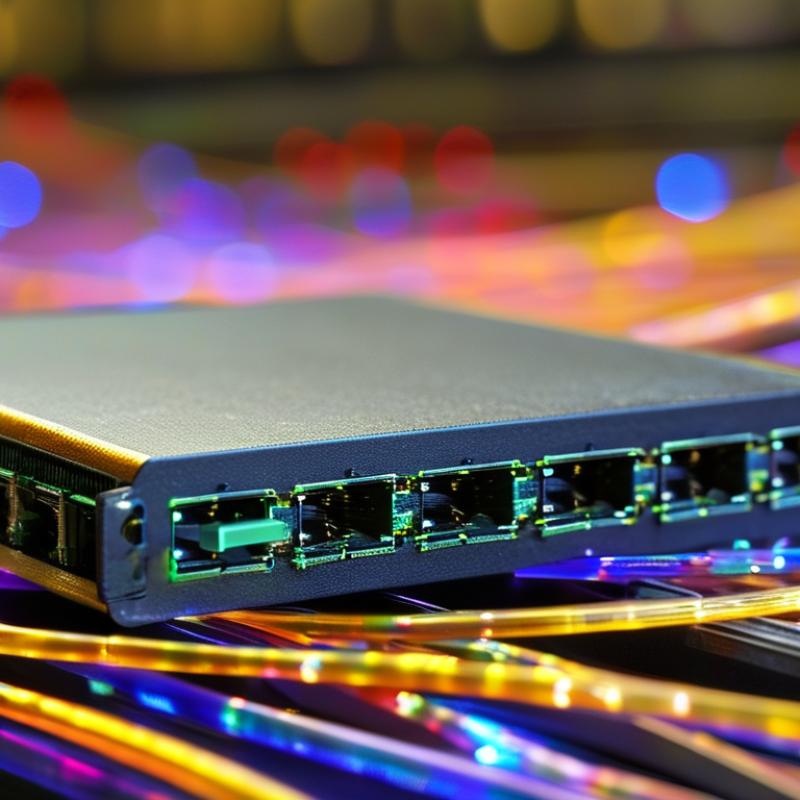
10G BiDi SFP Definition: 10.3125 Gb/s Transmission over One Fiber
What Is a 10G BiDi SFP Transceiver?
A 10G BiDi SFP transceiver provides 10.3125 Gb/s line-rate transmission through one single-mode fiber. The IEEE 802.3ae standard defines this rate for 10 Gigabit Ethernet. BiDi means bidirectional. One optical wavelength sends data, while another receives it on the same fiber. Common wavelength pairs include 1270/1330 nm or 1330/1270 nm. The two ends must use opposite wavelength configurations.
This design reduces cabling requirements. It can also release a spare fiber for expansion. TeleGeography’s 2024 Global Bandwidth Research Service reported about 1,402 Tb/s of international bandwidth in service during 2023. That figure reflects growing pressure on existing fiber routes. BiDi optics help operators extend capacity where new fiber installation is expensive or physically difficult. They fit compact SFP+ ports and commonly support digital diagnostics through SFF-8472 functions.
The 10.3125 Gb/s figure is a signaling rate, not guaranteed application throughput. Encoding, protocol overhead, connector loss, and optical power margins reduce usable performance. Check the fiber type, wavelength direction, reach, and receiver sensitivity before deployment. A matched pair is essential. I have seen installations fail because both modules transmit on the same wavelength. The specification looked correct. The pairing was not. Temperature, bend radius, and dirty connectors also deserve attention, although they are often ignored during quick upgrades.
How BiDi WDM Uses 1270/1330 nm Paired Wavelengths
What Is a 10G BiDi SFP Transceiver?
A 10G BiDi SFP transceiver carries 10 Gb/s Ethernet over one optical fiber. BiDi means bidirectional transmission. It sends and receives light through the same strand. The key is wavelength separation. One end transmits at 1270 nm and receives at 1330 nm. The remote end reverses those functions. WDM filters separate the two optical signals inside the transceiver. No second fiber is required.
During deployment, a 1270/1330 nm pair must be installed as a matched set. Using two identical-direction modules can leave the link dark. Fiber type, connector cleanliness, splice loss, and transmission distance still affect performance. A power meter can verify optical levels at both ends. Digital diagnostics may also reveal temperature, voltage, and received power. One detail is easy to miss: wavelength labels describe transmit and receive roles, not port direction. The labels can look confusing. That confusion is normal. Nominal reach is not a guarantee, because real fiber losses and aging can reduce the safety margin.
Tips: Check the transceiver datasheet before installation. Confirm the host equipment supports 10G BiDi operation. Clean every connector, then inspect it. Record the 1270 nm and 1330 nm roles at each end. This small note prevents many avoidable swaps. Keep spare matched pairs available, but verify their specifications first.
Key Specifications: SFP MSA, Simplex LC, and Up to 10 km Reach
What Is a 10G BiDi SFP Transceiver?
A 10G BiDi SFP transceiver carries 10Gbps data over one optical fiber. BiDi means bidirectional transmission. One wavelength sends data, while another receives it. This design uses a simplex LC connector instead of a duplex pair. It can simplify cabling in crowded racks and reduce fiber usage.
The module follows the SFP MSA mechanical and electrical framework. Therefore, it fits compatible SFP+ ports across many network devices. However, both ends must use complementary wavelength specifications. A mismatched pair will not establish a link. The stated reach can extend up to 10 km over suitable single-mode fiber. Real performance depends on fiber loss, connector cleanliness, splicing, and optical power. Ten kilometers is a limit, not a promise.
Tips: Check the transmit and receive wavelengths before installation. Inspect the simplex LC end face with proper cleaning tools. Confirm the host port supports 10Gbps operation. DOM readings can help identify weak signals, but they should not replace power-meter testing. In field work, this step is often skipped. That is a costly habit. Also verify the optical budget, ambient temperature, and fiber route length. A short link may still fail when excessive connectors or poor splices consume the available margin.
| Specification | Typical Value | Technical Description |
|---|---|---|
| Transceiver Type | 10g Bidi Sfp+ | A bidirectional optical transceiver that transmits and receives data over a single optical fiber. |
| Standards and Compliance | 10 Gigabit Ethernet; SFP MSA | Designed around the Small Form-factor Pluggable Multi-Source Agreement and commonly used with 10G Ethernet equipment. |
| Form Factor | SFP+ | Compact, hot-pluggable module format for high-speed network switches, routers, and compatible optical platforms. |
| Fiber Interface | Simplex LC | Uses one LC connector and one single-mode fiber strand for both upstream and downstream optical traffic. |
| Maximum Reach | Up to 10 km | Typical maximum distance over compliant single-mode fiber; the actual distance depends on link loss, splicing, and installed cabling. |
| Fiber Type | Single-mode fiber | Normally deployed over 9/125 µm single-mode optical fiber for metropolitan, access, campus, and enterprise links. |
| Wavelength Pair | 1270/1330 nm or 1330/1270 nm | One module transmits at one wavelength and receives at the other; the remote endpoint must use the complementary wavelength pair. |
| Optical Direction | Bidirectional over one strand | Wavelength-division multiplexing separates the transmit and receive channels on the same fiber. |
| Data Rate | 10 Gbit/s class | Supports 10 Gigabit Ethernet applications, subject to host-device compatibility and the module’s specific operating range. |
| Optical Budget | Typically about 6–7 dB | Representative budget for a 10 km class link; verify the exact transmitter power, receiver sensitivity, and connector loss for each deployment. |
| Electrical Host Interface | 10G serial electrical interface | Connects to the host system through the standard SFP+ electrical connector and high-speed serial interface. |
| Operating Voltage | 3.3 V nominal | Powered by the host equipment through the SFP+ cage and electrical interface. |
| Digital Diagnostics | DDM/DOM: commonly available | Depending on the module and host system, monitoring may include temperature, supply voltage, laser bias current, transmit power, and receive power. |
| Operating Temperature | 0°C to 70°C typical commercial range | Industrial-temperature versions may support a wider range; confirm the required temperature grade before installation. |
| Laser Safety | Class 1 laser product | Compliant modules are designed for safe operation under normal use when installed and handled according to applicable safety requirements. |
| Typical Applications | Access, campus, enterprise, and metropolitan networks | Suitable for point-to-point 10G links where available fiber strands are limited and a duplex pair is not required. |
| Compatibility Requirement | Complementary wavelength at both ends | A BiDi link requires two matched modules with opposite transmit and receive wavelengths; two identical modules will not normally establish the optical link. |
10GBASE-BX Compatibility, Optical Budgets, and Network Applications
What Is a 10G BiDi SFP Transceiver?
A 10G BiDi SFP transceiver carries 10 Gb/s Ethernet over one single-mode fiber. It uses two wavelengths, such as 1270 nm and 1330 nm, for opposite traffic directions. The two ends must use complementary wavelength pairs. They are not interchangeable.
The ITU’s Facts and Figures 2024 reports 5.5 billion people used the internet in 2024. This growth keeps fiber upgrades relevant in access networks, campus links, and compact data centers. 10GBASE-BX modules usually support 10 km-class connections, but the label alone proves little. IEEE 802.3-2022 defines 10 Gb/s Ethernet operation, while each module’s optical compliance requires separate checking. That detail is easy to miss.
Optical budget decides whether the link survives real conditions. A typical 10 km BiDi optic may advertise roughly 8–10 dB, depending on its class. This budget must cover fiber attenuation, connectors, splices, and aging margin. A clean 10 km cable route can still fail after several dirty connectors. I would not treat “10 km” as a promise. It is a design limit.
For deployment, calculate total loss first. Then match the transmitter and receiver wavelengths. Check duplex compatibility, receiver sensitivity, fiber type, and diagnostic monitoring. In practice, BiDi reduces cabling and can simplify crowded riser pathways. However, troubleshooting becomes less forgiving when one wavelength pair is installed incorrectly. That is the part many quick installation guides understate.
10G BiDi SFP Transceiver: Optical Budget Comparison
The chart compares commonly referenced optical budgets for 10 Gb/s Ethernet single-mode and multimode link profiles. A 10GBASE-BX link typically uses one optical fiber with two different wavelengths, such as 1270 nm and 1330 nm, and its two transceivers must be installed as a matched pair.
10GBASE-BX is generally designed for approximately 10 km over single-mode fiber, with a budget comparable to a 10GBASE-LR-class link. Actual compatibility depends on wavelength pairing, connector and splice loss, fiber type, polarity, and the transmitter and receiver specifications. The values shown are reference budgets rather than a guarantee for every BiDi implementation.
Installation Factors: Matching Tx/Rx Wavelengths and Link Standards
A 10G BiDi SFP transceiver carries 10Gb Ethernet traffic over one fiber strand. It transmits and receives on separate wavelengths. Common pairs include 1270/1330 nm or 1310/1550 nm. The two ends must use opposite wavelength directions. If both modules transmit at 1270 nm, the link stays dark. Simple mistake.
Wavelength matching should come before connector cleaning or power testing. Check the module label, distance rating, fiber type, and optical budget. ITU-T G.652.D lists maximum attenuation near 0.4 dB/km at 1310 nm and 0.3 dB/km at 1550 nm. Real links also lose power through connectors, splices, and bends.
A 10 km rating is not automatic. The installed path may be shorter, but its loss can still exceed the receiver limit.
The host port must support the intended electrical and Ethernet standard. IEEE 802.3-2022 defines 10GBASE-LR for 10 Gb/s operation over up to 10 km, using 1310 nm on duplex single-mode fiber. BiDi modules use one strand, so their optical specification needs separate verification. Confirm coding, temperature range, and digital diagnostics through the equipment documentation.
Field technicians often test only light levels, then miss incompatible host settings. That approach is convenient, but incomplete. SFF-8472 diagnostic data can reveal temperature, bias current, and transmit power during commissioning. Keep the test record. It exposes assumptions that the installation drawing may hide.
