


Blog 
How to Choose Reliable Fire Hose Manufacturers?
Choosing reliable fire hose manufacturers requires more than comparing prices, colors, or catalog photographs. A dependable supplier proves performance through documented testing, consistent materials, and traceable production. The hose should match the intended service, including municipal firefighting, industrial protection, marine use, or wildland response. Each application creates different demands.
Steve Kerber, executive director of the UL Fire Safety Research Institute, has said, “Firefighters need to know what they’re going into.” That warning applies to every hose purchase. Buyers should request test reports, certification details, pressure ratings, coupling specifications, and inspection procedures. They should also examine the liner, jacket construction, abrasion resistance, and flexibility after repeated use. Small details matter. A stiff hose can slow deployment beside a smoke-filled engine bay.
Trustworthy fire hose manufacturers explain their quality controls clearly. They welcome factory audits, provide batch identification, and support field testing. They do not hide behind vague claims such as “premium quality.” Look for evidence from recognized standards and independent laboratories. Still, no supplier is flawless. Certificates can expire, and impressive samples may not represent every production batch. This guide cannot remove every uncertainty. It can encourage better questions, careful comparisons, and practical verification before purchase. The strongest decision usually combines technical evidence, service history, responsive communication, and feedback from crews who have handled the hose in real conditions.
Define Application Needs Under NFPA 1960: Diameter, Length, and Pressure Class
How to Choose Reliable Fire Hose Manufacturers?
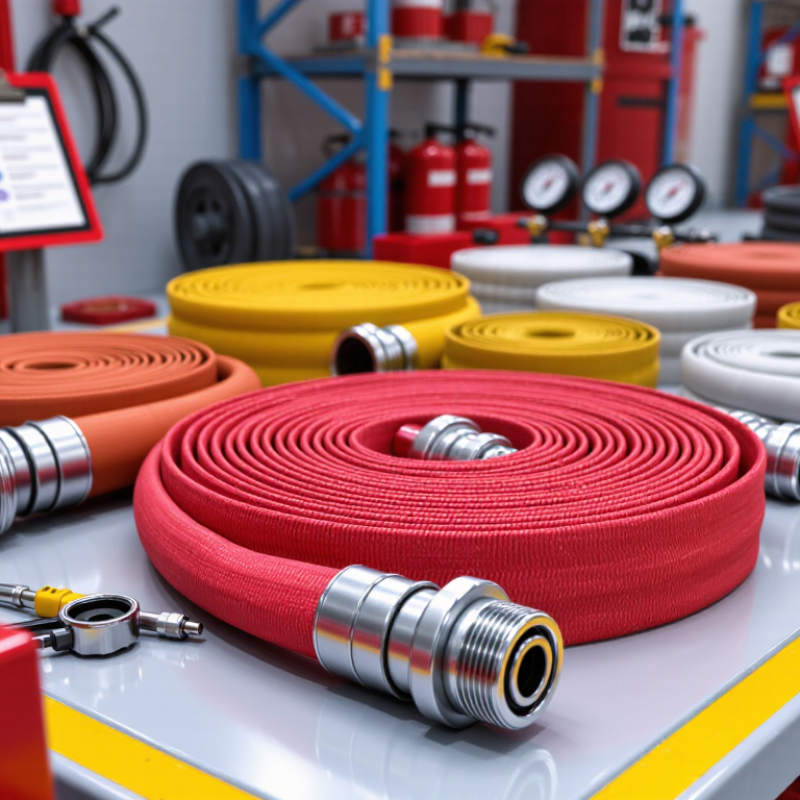
Choosing a reliable fire hose manufacturer starts with the application, not the catalog. Under NFPA 1960, define the required diameter, length, and pressure class before comparing suppliers. Diameter affects flow, friction loss, and handling effort. A larger hose may deliver more water, but it can slow deployment in narrow corridors. Length should reach the farthest operating point without creating unnecessary loops. Measure the actual route, including stairs and access doors.
Pressure selection requires careful judgment. Confirm the hose’s service pressure, test pressure, and burst pressure from controlled documentation. These values should match the pump system and the site’s operating conditions. Do not rely on a general label such as “heavy duty.” Ask whether the manufacturer performs routine hydrostatic testing and records production batches. Traceable markings matter during inspection.
Look for technical drawings, material specifications, and clear maintenance instructions. A dependable manufacturer should explain how coupling design, lining quality, and cover materials affect performance. Request samples when possible. Bend them, inspect the lining, and check connection fit. Small details reveal consistency.
A neat spreadsheet can still miss field reality. I would review storage temperature, chemical exposure, abrasion risks, and expected deployment frequency. Some selections fail because users measure straight-line distance only. That mistake is common. Choose a supplier willing to question your assumptions, not one that simply confirms the first specification.
How to Choose Reliable Fire Hose Manufacturers? — Define Application Needs Under NFPA 1960: Diameter, Length, and Pressure Class
| Application | Typical Nominal Diameter | Common Hose Length | Typical Pressure Requirement | Recommended Construction | Key NFPA 1960 Selection Checks | Manufacturer Reliability Evidence |
|---|---|---|---|---|---|---|
| Interior attack lines | 1.5 in or 1.75 in (38 mm or 45 mm) |
50 ft or 100 ft (15.2 m or 30.5 m) per section |
Commonly 250–300 psi service-test range; verify the required pressure for the complete assembly | Flexible jacketed attack hose with a lining compatible with the intended water, foam, temperature, and abrasion conditions | Confirm listed diameter, service-test pressure, coupling compatibility, friction-loss data, and required fire-resistance performance | Current third-party listing or certification, traceable production records, hydrostatic-test procedure, and batch identification |
| High-flow attack lines | 2.5 in (65 mm) |
50 ft or 100 ft (15.2 m or 30.5 m) per section |
Commonly 250–300 psi service-test range; calculate nozzle pressure and appliance losses | Heavy-duty jacket and liner designed for higher flow, repeated deployment, and mechanical wear | Check flow capacity, minimum bend radius, coupling type, pressure-loss performance, and compatibility with the selected nozzle | Documented flow and pressure testing, consistent coupling dimensions, inspection records, and a defined warranty process |
| Municipal supply or relay hose | 3 in, 4 in, 5 in, or 6 in (75, 100, 125, or 150 mm) |
50 ft or 100 ft (15.2 m or 30.5 m) per section; larger-diameter hose may be supplied in other approved lengths |
Often selected in a lower-pressure supply-hose class than attack hose; confirm the listed service-test pressure and pump discharge conditions | Large-diameter, low-friction supply hose with abrasion-resistant jacket and couplings matched to the water-supply system | Evaluate flow at the planned pressure, coupling size, hydrant or pump connection, weight when charged, and drainability | Verified dimensional tolerances, flow-test data, pressure-test records, and demonstrated compatibility with local hydrant and coupling standards |
| Industrial fire brigade attack hose | 1.5 in, 1.75 in, or 2.5 in (38, 45, or 65 mm) |
50 ft or 100 ft (15.2 m or 30.5 m) per section |
Select a pressure class that exceeds the system operating pressure and is suitable for the specified test pressure | Chemical-, heat-, and abrasion-resistant construction selected for the site’s fuels, chemicals, radiant heat, and traffic exposure | Review chemical compatibility, temperature rating, electrical or static-control requirements where applicable, and cleaning procedures | Material compatibility declarations, representative sample testing, controlled raw-material sourcing, and documented quality audits |
| Wildland and urban-interface response | 1 in, 1.5 in, or 1.75 in (25, 38, or 45 mm) |
50 ft or 100 ft (15.2 m or 30.5 m) per section |
Use the pressure class specified by the apparatus, pump, nozzle, and applicable fire-service requirements | Lightweight, flexible jacket with strong abrasion resistance and suitable performance in heat, dirt, and uneven terrain | Check weight, packability, kink resistance, coupling retention, heat exposure, and pressure behavior during long deployments | Field-test results, consistent weight and dimensions, UV and abrasion data, and clear inspection and replacement guidance |
| Foam solution delivery | 1.5 in, 1.75 in, or 2.5 in (38, 45, or 65 mm) |
50 ft or 100 ft (15.2 m or 30.5 m) per section |
Confirm the pressure class and flow range for the foam concentrate, proportioner, nozzle, and complete hose assembly | Liner and cover must be compatible with the selected foam solution and cleaning chemicals | Verify chemical compatibility, flow loss, flushing requirements, coupling materials, and resistance to repeated wetting and drying | Compatibility testing, written chemical-resistance information, assembly traceability, and documented pressure and leakage tests |
| Fixed cabinet or standpipe hose | 1.5 in or 2.5 in (38 mm or 65 mm), according to system design |
Typically 50 ft or 100 ft (15.2 m or 30.5 m), subject to the installed system design |
Must be suitable for the standpipe or building system pressure, including any required pressure-regulating equipment | Flexible hose or semi-rigid hose arrangement selected for rapid access, storage, and routine inspection | Confirm cabinet dimensions, hose rack or reel compatibility, valve and coupling type, accessibility, and required inspection intervals | Accurate dimensional drawings, installation guidance, lot traceability, and evidence of conformity to the specified hose standard |
| Large-diameter water-transfer operations | 4 in, 5 in, or 6 in (100, 125, or 150 mm) |
50 ft or 100 ft (15.2 m or 30.5 m) per section, unless the approved design specifies otherwise |
Select according to pump discharge pressure, elevation change, friction loss, and the hose’s listed service-test pressure | High-flow supply hose with reinforced jacket, dependable couplings, and a liner suited to the intended water source | Calculate total dynamic pressure, inspect for collapse or kinking, and confirm coupling alignment and drainage requirements | Independent flow-performance data, pressure-test documentation, coupling pull-off testing, and replacement-part availability |
Important: The dimensions and pressure ranges above are common procurement references, not a substitute for the applicable NFPA 1960 edition, local authority requirements, system calculations, or the manufacturer’s certification. Always verify the required diameter, length, service-test pressure, coupling configuration, lining compatibility, and complete-assembly performance before purchase.
Related Posts
-

Why Are Fire Hoses Essential for Effective Fire Safety and Emergency Response
-

Best Fire Hose Manufacturers in 2023 Top Quality Options You Need to Know
-

Top 10 Fire Hoses for Global Buyers in 2026?
-

How to Choose the Best Fire Hose Manufacturers for Your Needs?
-
Top Fire Hose Manufacturers You Should Consider for Quality?
-
Why Are Fire Hoses Essential for Industrial Safety?