Blog 
2026 How to Choose the Best 4 Inch Fire Hose?
Choosing the Best 4 Inch Fire Hose in 2026 requires more than comparing price, coupling style, or advertised flow. A 4 fire hose usually serves as a large-diameter supply line, moving substantial water between hydrants, pumps, relay systems, and aerial operations. Its value appears at the incident ground: a stiff hose bends around a parked vehicle, couplings scrape across concrete, and crews must advance it without losing time.
NFPA 1960: Standard for Fire Hose, 2024 Edition, emphasizes hose performance, construction, testing, and service reliability. UL 19 also provides important benchmarks for lined fire hose used in fire protection operations. Meanwhile, the NFPA U.S. Fire Department Profile shows how frequently departments respond to demanding, time-sensitive incidents. These reports support a practical conclusion. Hose selection should reflect real deployment conditions, not laboratory claims alone.
Ken Isman, a recognized fire-service hose specialist and author of Fire Hose: A User’s Guide, offers a useful principle: “The best hose is the one firefighters can deploy, advance, and maintain reliably.” That idea should guide every 2026 comparison. Buyers should examine flow capacity, pressure ratings, abrasion resistance, kink behavior, weight, coupling compatibility, cleaning needs, and manufacturer testing records. There is no perfect hose. A lighter product may be easier to handle, yet less durable under repeated roadway deployment. A thicker jacket may improve protection, but increase storage demands. These trade-offs deserve honest review. A spreadsheet cannot replace a charged-line drill.
What Is a 4 Inch Fire Hose and Where Is It Used?
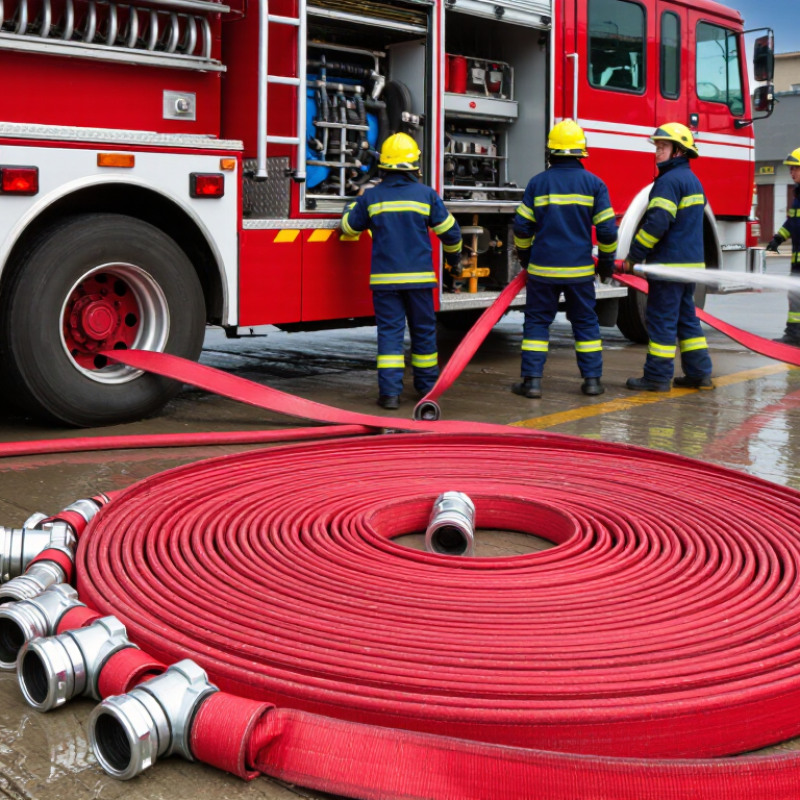
A 4 inch fire hose is a large-diameter hose designed to move substantial water volumes with less friction loss. Its internal diameter is approximately four inches, although actual measurements vary by construction. Fire departments commonly use it as a supply line between a hydrant, pump, or water tender and the attack engine. It may also serve at industrial facilities, ports, tunnels, and large warehouses where long water runs are necessary.
The hose is heavy when dry and far less flexible than smaller attack lines. Crews usually deploy it in straight sections, using compatible couplings and carefully secured connections. A typical setup may run from a hydrant beside a road to a pumper parked near a burning warehouse. The required pressure rating must match the pump system, and the lining should resist water, heat, abrasion, and repeated folding. After use, proper draining and drying matter. Trapped moisture can damage the inner tube and encourage mildew.
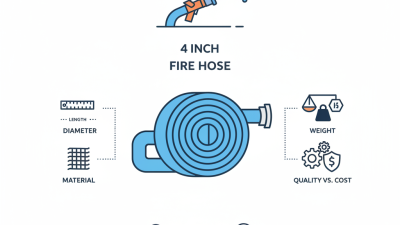
Choosing a 4 inch hose is not only about maximum flow. Weight, bend radius, coupling type, storage space, and inspection access can change its real performance. A hose may have an impressive pressure rating yet remain impractical for a small crew. That detail is easy to miss. Field inspections should check cuts, crushed sections, damaged couplings, and visible lining defects. Testing should follow the manufacturer’s instructions and the responsible authority’s procedures, because actual service conditions often expose weaknesses that specifications do not show.
2026 How to Choose the Best 4 Inch Fire Hose?
What Is a 4 Inch Fire Hose and Where Is It Used?
A 4 inch fire hose has a nominal diameter of 101.6 mm and is commonly selected for high-volume water transfer, fire department supply lines, hydrant-to-pump connections, industrial fire protection, and large-scale dewatering. Its larger bore provides substantially more cross-sectional area than smaller hose sizes, helping support high-flow operations when the pump, fittings, and water source are properly matched.
The chart compares nominal hose diameters with their theoretical circular cross-sectional areas. Actual inside dimensions vary by hose construction, lining, coupling design, and operating pressure, so rated flow and pressure-loss data should always be checked before selection.
How to Match Hose Materials with Firefighting Requirements
Choosing the best 4 inch fire hose starts with the material, not the diameter alone. A large hose can deliver substantial water flow, but its construction must suit the working environment. Synthetic woven jackets offer good flexibility and easier handling during deployment. Rubber-lined designs usually provide stronger resistance to heat, abrasion, and repeated pressure. The liner should also resist the water, foam solution, or chemicals used during operations.
Consider the site carefully. A municipal hydrant supply line may need a lightweight hose with strong abrasion resistance. Industrial facilities may require thicker protection near hot surfaces, sharp edges, or chemical exposure. Check the hose’s rated working pressure, burst pressure, temperature range, coupling compatibility, and bend radius. Certification and test records matter. They provide evidence beyond a sales specification.
Field experience often changes the decision. I once favored a lighter hose because crews could move it faster. That seemed efficient. After repeated dragging across rough concrete, the outer jacket showed damage sooner than expected. A heavier construction might have served better there. Still, extra weight can slow deployment and increase fatigue. There is no perfect material for every response. Inspect the hose after each use, especially around couplings, folds, and exposed stitching. Store it clean, dry, and away from direct sunlight. A practical choice matches material performance with real operating conditions, crew strength, maintenance habits, and verified firefighting requirements.
2026 How to Choose the Best 4 Inch Fire Hose? - How to Match Hose Materials with Firefighting Requirements
| Firefighting Requirement | Recommended Hose Construction | Suitable Material Combination | Typical Performance Characteristics | Advantages | Limitations and Selection Checks |
|---|---|---|---|---|---|
| High-volume water transfer and relay pumping | 4-inch flexible layflat delivery hose | Woven polyester jacket with an extruded EPDM or thermoplastic rubber lining | Nominal inside diameter: approximately 100 mm (4 in); common working-pressure classes are approximately 150–300 psi, depending on construction and certification | Lightweight compared with rigid pipe, compact for storage, and suitable for rapid deployment | Confirm the manufacturer’s working pressure, proof-test pressure, coupling rating, abrasion resistance, and minimum bend radius before use |
| Municipal structural firefighting | Large-diameter supply hose with a reinforced jacket and lined bore | High-tenacity polyester or synthetic-fiber jacket with EPDM, nitrile-based, or thermoplastic rubber lining | Designed for large water flow with lower friction loss than smaller hose; pressure capability varies by listed hose assembly | Good balance of flow capacity, flexibility, durability, and deployment speed | Use only hose assemblies with compatible couplings and approvals required by the local fire authority; do not select by diameter alone |
| Oil, fuel, or hydrocarbon-contaminated environments | Heavy-duty delivery hose with a fuel-resistant inner lining | Nitrile rubber or nitrile/PVC compound lining with a polyester jacket; protective outer coating may be added | Better resistance to petroleum-based contamination than standard natural-rubber or unprotected PVC linings | Suitable for industrial sites, vehicle incidents, and areas where oil exposure is possible | Check chemical compatibility, temperature limits, permeation resistance, cleaning procedure, and whether the hose is approved for the intended fire service |
| Outdoor exposure, ozone, and weathering | Weather-resistant lined delivery hose | EPDM lining with a synthetic woven jacket and UV-resistant outer treatment | EPDM generally provides strong resistance to ozone, weathering, and many water-based chemicals | Longer service potential in outdoor storage and repeated wet-dry cycles when properly maintained | EPDM is generally not suitable for petroleum oils and fuels; verify chemical compatibility before deployment |
| Abrasive industrial areas and rough ground | Reinforced heavy-duty layflat or semi-rigid delivery hose | Multiple-layer polyester jacket with abrasion-resistant rubber or thermoplastic elastomer cover | Improved resistance to dragging, scuffing, and puncture compared with a lightweight single-jacket design | Better durability around concrete, aggregate, metal edges, and industrial equipment | Greater wall thickness can increase weight and reduce flexibility; inspect for jacket cuts, exposed reinforcement, and liner damage |
| Foam solution conveyance | Delivery hose verified for the selected foam concentrate or premixed solution | Usually EPDM, nitrile-based rubber, or a compatible thermoplastic lining | Performance depends on foam chemistry, concentration, temperature, and exposure time | Can support large-flow foam systems when the lining and couplings are chemically compatible | Do not assume water-service hose is suitable for foam concentrate; obtain compatibility data and flush the hose after use when required |
| Drafting from a static water source | 4-inch suction hose with rigid helix or reinforced semi-rigid wall | Rubber or thermoplastic liner with embedded wire helix and reinforced outer cover | Designed to resist collapse under suction; vacuum capability is more important than delivery-hose working pressure | Maintains an open flow path during drafting when correctly supported and connected | A flexible layflat delivery hose is not a substitute for suction hose; check vacuum rating, bending radius, strainer compatibility, and coupling seal |
| Low-temperature operation | Cold-flexible delivery or suction hose selected for the site climate | Low-temperature-rated EPDM, nitrile compound, or thermoplastic material specified by the manufacturer | Flexibility and pressure performance depend on the compound and the actual operating temperature | Reduces the risk of cracking, stiffness, and handling problems in cold conditions | Check the minimum service temperature, storage temperature, ice formation risk, and compatibility with the extinguishing agent |
| High-temperature surroundings | Heat-resistant lined hose with suitable protective cover | Heat-rated EPDM or specialized rubber lining with a high-temperature-resistant textile jacket | Temperature limits vary significantly; direct flame contact can damage most hose constructions | Better resistance to radiant heat and hot-surface exposure than general-purpose hose | Review continuous and intermittent temperature ratings; keep hose away from direct flame, hot slag, and unprotected sharp edges |
| Fire pump connection and system compatibility | Complete 4-inch hose assembly with rated couplings | Material selected according to the hose service, with corrosion-resistant coupling material compatible with water and site conditions | Flow performance is affected by bore smoothness, coupling design, hose length, bends, and elevation | Provides a controlled connection between pumps, hydrants, manifolds, and portable water supplies | Verify nominal diameter, coupling type, thread or lug dimensions, gasket material, pressure rating, and local connection requirements |
| Inspection, maintenance, and service life | Hose with traceable identification and a documented inspection program | Any approved construction that can be cleaned, dried, inspected, and pressure-tested according to the applicable procedure | Service life is affected by pressure cycles, abrasion, ultraviolet exposure, chemicals, heat, storage, and drying practices | Regular inspection helps identify cuts, blisters, mildew, delamination, damaged couplings, and liner deterioration | Remove hose from service when it fails inspection or testing criteria; follow applicable fire-service standards and the hose manufacturer’s instructions |
Which Pressure, Flow Rate, and Coupling Features Matter?
Choosing a 4-inch fire hose starts with pressure, not appearance. Its diameter suggests capacity, but actual performance depends on length, elevation, lining, and pump output. Select a hose with a rated working pressure above the system’s normal discharge pressure. Confirm its service-test pressure and coupling rating separately. Do not treat them as identical values.
Flow is not diameter alone. A 4-inch hose may support high-volume supply operations, but friction loss rises with flow and hose length. Hydraulic calculations should use the actual flow target, not a convenient estimate. NFPA’s Fire Loss in the United States During 2023 report recorded about 1.5 million fires and 22.6 billion dollars in property damage. That scale makes dependable water delivery more than a technical preference. It is an operational requirement. Still, a simple flow chart can mislead when elevation or damaged linings are ignored.
Couplings deserve equal attention. Match the connection type, gasket material, locking method, and pressure rating to the existing water system. A loose coupling can waste water before crews notice the pressure drop. Small details matter. NFPA 1961 addresses hose construction and performance, while NFPA 1962 covers inspection, care, and service testing. Inspectors should check abrasion, soft spots, exposed reinforcement, and coupling distortion. Test it under load. Field conditions are rarely perfect, and my selection process would include a margin for aging, temperature, and human error.
How to Evaluate Durability, Safety, and Maintenance Needs
A 4-inch fire hose moves substantial water, but diameter alone proves little. In field inspections, weak couplings and damaged linings often create greater risks than visible jacket wear. Choose hose with a documented working pressure, strong abrasion resistance, and compatible couplings. Check the bend radius too. A stiff hose can delay deployment.
The NFPA estimated 1,388,500 fires in the United States during 2023, showing why dependable equipment matters (NFPA, Fire Loss in the United States During 2023). NFPA 1962 provides guidance for hose inspection, service testing, care, and replacement. Ask for traceable test records, not only a certificate. Examine stitching, gasket condition, mildew, cuts, and heat damage. A clean exterior does not guarantee a sound lining.
Maintenance should match the operating environment. Rinse salt, mud, and chemical residue from the hose after use. Dry it fully before storage, away from sunlight and sharp edges. Keep couplings capped. Store coils without crushing them. Small defects matter. I would not select a hose only by weight or price; that shortcut can hide poor reinforcement. Periodic pressure testing is essential, but visual checks between tests remain necessary. NFPA’s firefighter fatality research also shows the human cost of equipment and operational failures (NFPA, Firefighter Fatalities in the United States, 2023). Even careful teams can miss problems. Record every inspection.
How to Compare Suppliers and Select the Right Hose in 2026
2026 How to Choose the Best 4 Inch Fire Hose?
In 2026, choosing a four-inch fire hose starts with comparing suppliers, not chasing the lowest quotation. Ask each supplier for pressure ratings, test procedures, material details, and traceability records. Confirm the hose matches your pump outlet, couplings, flow rate, and storage space. A hose that fits poorly can delay deployment during a critical response.
Look for suppliers with documented quality control and repeatable factory inspections. Request recent test reports from an independent laboratory when available. Check how the supplier handles batch identification, replacement parts, warranty claims, and field complaints. Speak with experienced fire-service technicians, not only sales representatives. Their answers often reveal whether technical support continues after delivery.
Examine a physical sample carefully. Bend it across a concrete floor and inspect the jacket, lining, stitching, and coupling finish. Look closer. Ask how the hose performs after repeated wetting, drying, dragging, and sunlight exposure.
My earlier comparisons sometimes favored a lower unit price, but transport damage and inconsistent lengths changed the real cost. That mistake remains useful. Compare total ownership cost, delivery reliability, inspection support, and service life. Verify every specification against current local fire-safety requirements and the equipment already installed at your site.
A supplier who welcomes difficult questions usually provides more dependable technical evidence.
Related Posts
-
China Best Fire Hoses for Global Wholesale Buyers?
-
2026 Best 4 Inch Fire Hose for Global Buyers?
-
Top 10 Differences Between Fire Hose and Garden Hose
-

How to Choose the Best Fire Hose Manufacturers for Your Needs?
-
How to Choose the Best 4 Fire Hose for Your Needs?
-
Top 10 Fire Hose and Garden Hose Manufacturers